As the world hurtles towards climate catastrophe, the prime suspects keeping the world on this track are busy blocking negotiations aimed at tackling the problem. Climate crimes are not merely the ones already visible, they include the ones that will unfold, they affect humans and other beings currently on earth and others in generations yet to come.
The fact that the suspects openly boast of their crimes, of subverting global efforts to stem the coming storms, and that a multilateral body such as the United Nations Framework Convention on Climate Change (UNFCCC) appears helpless to call them out, says a lot about policy makers’ will to take real climate action. The open boast by such an official should be seen as admittance to a felony.
A report came out last week that an official of a notorious oil company boasted that his company was responsible for articles that ensure climate inactions and promote false market mechanisms in the acclaimed Paris Agreement. He also boasted that their text was appearing in the Paris Agreement’s Rule Book which was being negotiated. The very next day after this boast, as the first week of COP24 drew to a close, four oil producing countries – USA, Kuwait, Saudi Arabia and Russia- loudly resisted the “welcoming” of the Intergovernmental Panel of Climate Change’s (IPCC) special report on the 1.5 degrees temperature limit. They insisted that the report should merely be noted, and possibly ignored. These countries, and others complicit by their unusual silence, more or less spurned the clear indication by science that the world has a slim window of time to avert catastrophic global warming. This is quite shocking because the IPCC is an agency of the UNFCCC specifically set up to figure out the climate trends and needed actions based on science.
The extreme weather events that have so far accompanied the current 1degree Celsius temperature rise and the pointer from the IPCC report that the world is on course for higher temperature increases, should raise alarm signals. It is reprehensible that people, governments and corporate entities would know the wrong headedness of fossil fuel dependence and yet work to entrench it. A situation where polluters and vested interests throw spanners into the works and processes of agreeing on real climate action demands the removal of such entities from the halls of multilateral negotiations.
It is a no-brainer for anyone to believe, or to propagate the idea that the waning fossil civilization will stretch much further into the future. Good sense must become common sense. The sensible direction is the conservative position that 80 per cent of known fossil reserves must be left unextracted and unburned if we are to keep temperature increases within bearable limits. This means that oil, coal and gas companies must stop searching for new reserves, even though that is the linchpin with which they attract funds from speculators and investors.
The current epoch has been erected on the platform of exploitation, accumulation and consumption. We have gotten to the planetary limits possible for continued reckless exploitation of nature. We need an alternative logic, a radical mindset change. This is not about doing things better or more efficiently; it is about toeing a totally different track, or pathway. We need a wholesale socio-ecological transformation. This is not a pipedream. There is much thinking and organizing going on in this direction around the world. In Uganda, there is the Sustainability Schools in villages; in South Africa there is the Environmental Justice Schooland in Mozambique there is the Seeding Climate Justiceprocess. In Nigeria, Health of Mother Earth Foundation runs the School of Ecology. Similar initiatives, many in the ecosocialist mold, are ongoing in Asia, Europe, North and Latin America. They all point to what labour framed as just transition from a carbon economy.
Although the just transition idea is anchored on energy shifts and creation of decent jobs, it extends to the need to transform our societies in such a way as to protect the best interests of the planet and the peoples. It is the vision of another world that confronts the challenge of building viable and sustainable societies. Just transition demands a tackling of the increasing inequality, including in terms of wealth and resource ownership. It is at the core of a much-needed system change.
When climate activists demand system change, they are referring to concrete systemic alternatives that are getting reluctantly recognized in the formal climate negotiations. Here we are referring to issues like loss and damage, gender rights and the rights of indigenous peoples. To these must be added the essential need of reparations to territories and nations that have been ravaged, exploited and rendered doubly vulnerable to climate impacts. These deserve payment of climate debts and not grants or extensions of charity. In addition, those responsible for ecocide must be held to account and made to pay for the full restoration of damaged ecological systems.
Just transition with decent jobs may also require a change in corporate management. The visions of corporate top brass may not be as long-term as those of the workers on the short floor. How about upending the current system and enthroning cooperative leadership from below?
As COP24 drags to a close, we can safely say that there will be no backslapping as was the case in Paris in 2015. Now we know that corporate interests ensured that an inherently ineffective and boobytrapped agreement was foisted on the world. We also now know that the same forces are working hard to ensure that the Paris Agreement Work Programme is tilted to ensure business as usual and allow fictive net carbon neutrality computations and dangerous technofixes. Surprisingly, there has been wide disagreements between rich nations and the vulnerable nations on how the NDCs will be delivered and evaluated.
Nevertheless, we applaud the committed African negotiators at COP24. They largely stuck to the justice principles of the climate convention. They also resisted a crafty rewriting of the Paris Agreement and defended the interests of the continent and other vulnerable peoples. The performance of African negotiators at the climate conference was in sharp contrast to that of their counterparts who bore the flags of the continent at the recently held Convention on Biodiversity COP14 that held in Egypt in November. In that conference, the negotiators played the scripts of the biotech industry and related political jobbers, and fought tooth and nail to eliminate regulations, allow risky technologies and to generally undo the safeguards that their predecessors had carefully built. The days in Egypt were sad days for Africa. In Poland, it can be said that although the process was less than would have been expected, our delegates did not trade the continent for some cheap copper coins.
————-
This piece was first published under the same title in my column The Instigator in Leadership Newspaper, Nigeria, on 14 December 2018. You can also watch an interview with Democracy Now! at COP24 in Katowice here.
President Buhari made a subtle Climate justice pitch in Katowice There is cautious optimism that nations may get serious about climate change as the 24th Conference of Parties to the United Nations Framework Convention on Climate Change (UNFCCC) opened in Katowice, Poland on 3 December 2018. The optimism is slim because the conference would essentially draw up the rule book for the implementation of the Paris Agreement of 2015. That agreement has been globally hailed as the singular effort of nations to jointly tackle global warming, ensuring that average global temperature rise is kept to 1.5 degrees Celsius or well below 2 degrees Celsius above pre-industrial levels.
The anchor on which action to tackle global warming hangs in the Paris Agreement, is what is called the Nationally Determined Contributions (NDCs) to emissions reduction. The key phrase here is Nationally Determined. This means that each nation must decide or determine what is convenient or feasible for them to do in terms of cutting emission of greenhouse gases known to cause global warming.
While the world celebrated the Paris Agreement, climate justice campaigners warned that there was nothing substantial on which to hang the celebratory banners. It was clear that powerful nations, who also happen to be the most polluting nations, would not cut emissions at source in ways that will halt the rising temperature dial. With pledges made and computed, the world is faced with the stark scenario of temperature rise in the range between 2.7 degrees and 3.5 degrees Celsius above pre-industrial levels. Such a temperature rise will simply roast the planet, kicking in cataclysmic climate events and making life impossible for humans and other beings in most parts of the world.
In addition, the pledges made by many countries are conditional on having certain supports by way of finance and technologies. Nigeria pledged to cut emissions unconditionally by 20 percent and conditionally by 45 percent with support from international partners. The country also planned to work towards ending gas flaring by 2030 and towards providing off-grid solar power of 13,000 Mega Watts. While making those pledges, it is expected that within the 2015-2030 implementation period, the national economic and social development would grow at the rate of 5 percent per year. It is well known that the economic fortunes of the nation are not anywhere near that level, by any measure.
As the curtains opened in Katowice on Monday, 03 December 2018, President Muhammadu Buhari was one of the heads of governments that took the podium in the high-level sessions. One highlight of President Buhari’s speech was his emphasis that in taking climate action the principle of Common but Differentiated Responsibilities (CBDR) must constantly apply. This was the hammer on the head of the climate nail because without adherence to this principle the justice basis of climate responsibility is forever lost. The CBDR principle was one of the strong anchors in the Kyoto Protocol of 1997. That protocol differentiated rich, industrialised polluting countries from poor, vulnerable and non-polluting nations. They were grouped under Annex I and Non-Annex I countries respectively.
The protocol provided a legally binding framework by which nations were supposed to be assigned scientifically determined emissions reduction targets. By that means, it was hoped that the effectiveness of emissions reduction would be known in advance if parties agreed to adhere to their assigned targets. The level of ambition of 37 industrialised countries and the European community in the first commitment period (2008-2012) of the Kyoto Protocol was a mere 5 percent against 1990 levels.
A second commitment period (2013-2020) was agreed in 2012 as the Doha Amendment. President Buhari announced during his speech that Nigeria was set to ratify the Doha Amendment. This agreement more or less provides life support for the Kyoto Protocol, especially after the emergence of the Copenhagen Accord (2009) and the Paris Agreement (2015) both of which are anchored on voluntary emissions reduction, with scant attention to the requirements of science.
The recently released special report of the Intergovernmental panel on climate change (IPCC) warns of the dire situation facing a world that has already crossed the 1-degree Celsius temperature increase above pre-industrial level. It gives the world an ominous 12-year window in which to act or descend into an utterly chaotic climatic situation.
While the big polluters are reticent, suggesting that the capacity to pollute is the mark of progress, some non-polluting countries are displaying NDCs that would mean cutting emissions they are not even emitting. These show that voluntary emissions reduction pathway is not the way out.
President Buhari spoke of the harsh situation the 14 million persons depending on the shrinking Lake Chad are facing. He spoke of the plans for an inter-basin water transfer that would see water from the Congo Basin being piped to recharge Lake Chad. The canalisation idea was first developed by an Italian firm, Bonifaca, about four decades ago. While the feasibility studies of that old recharge idea are being worked out, perhaps we can work on examining the ground water management systems in the region with the aim of conserving and protecting what is left to keep the lake alive.
The president’s speech covered many areas, including the need to maintain sound environmental management in economic development. Surprisingly, he said nothing about ending gas flaring. Considering that the Nigerian National Petroleum Corporation (NNPC) is selling the idea that gas flaring would end by 2020 ahead of the 2030 target set by Nigeria’s NDC, and has placed advertisements in papers indicating readiness to pursue that goal. It was disappointing that the president did not utilize that global stage to show how Nigeria is taking leadership in cutting emissions from one of the most obnoxious sources.
As the first week of COP24 draws to a close, the world is waiting to see if the leaders in Katowice will wake up to the fact that the NDCs are not the right way forward. To continue on the path that inexorably leads to intractable climate chaos is another side of the denial coin sold by the political heads of the USA and Brazil.
————–
This piece was first published on 7 December 2018 as Buhari’s Climate Justice Pitch in Katowice in my Leadership newspaper column, The Instigator
I dream of clean creeks. Writing about the creeks and swamps of the Niger Delta can be quite a struggle for me at times. Many times, I have set aside my poetry quill and declared to myself that I would no longer write poems like these. But then something happens that prompts a line, and then another one, and more.
I would rather write more poems about lush vegetations, of butterflies and beautiful gazelles. Poems inspired by love, of which I have done a few in the past. One stanza penned for my soul mate echoes in my mind often: When I see you/ I see you again/ and again and again. On reflection, those lines echo lines by the master poet, Odia Ofeimun, which he wrote about his father: I see my father’s face in every mirror, if I remember correctly.
I see the creeks of the Niger Delta in every creek and river I encounter in my pollution tours around the world. When I look into streams and rivers and see the fish swirling about, and the pebbles and white sands way beneath the surface of the water, I pause and reflect on what once was the condition of the Niger Delta. I also think of what was once the state of the lagoons of Lagos, the Challawa River of Kano as well as the Kaduna River. These creeks, streams, rivers and estuaries of the Niger Delta now wear the cloak of hydrocarbon pollution, like the proverbial mourner or penitent dressed in burlap.
It would probably take a space probe to see the bottom of even the shallowest creek or pond in the Niger Delta because of the thick layer of crude oil and related pollutants that have literally choked the daylight out of them. The only relief to the eye in these hellish seascapes is fish floating belly-up having dared to survive for a time in such a hostile environment. The Lagos Lagoon and rivers Challawa and Kaduna do not fare any better, clogged with pollutants of a different class – ranging from effluents from factories, waste oil to sundry wastes from households.
What is hardly spoken about is the huge amount of waste water that comes out of crude oil drilling. Known as produced or process water, this highly toxic water can, at times, be radio-active. On average, about five barrels of water are produced for every barrel of crude oil extracted. Some oil fields may produce higher volumes, but if Nigeria extracts 2 million barrels of crude oil per day, we can expect that there are 10 million barrels of produced water to contend with on a daily basis. How do oil companies dispose of this highly toxic wastewater?
The wastewater can be used as production fluid by pumping or reinjecting it to help recover more oil from the wells. They could also be stored in containment ponds lined with water proofing membranes and detoxified to some extent before being discharged into the environment. The question as to whether this toxic wastewater is handled in Nigeria according to the best international standards is an open one.
Between 2008 and 2010, Sign of Hope, a German charity, took 90 water samples from 76 locations in oil field communities in Thar Jath, South Sudan. The result of the hydrogeological study was released in 2014 and showed that the ground water in the areas was heavily contaminated with salts and heavy metals. It was later confirmed, by scientific analyses of hair samples, that the people have been exposed to chronic poisoning by the heavy metals including lead and barium. The threat to the health of the people has been persistent and unrelenting. The conflict situation in the area may have served as a cover for environmental misbehaviour, but with returning peace, demands are being made for thorough health audits of the population and the provision of alternative and safe drinking water for the people.
The oil pollution in South Sudan pales compared to the situation in Nigeria. Now is the time to ask questions about how Shell, Chevron, Exxon, Agip, Total, the Nigerian Petroleum Development company and others handle their toxic produced water. Could it be that millions of barrels of toxic water are discharged into the creeks, rivers and estuaries of the Niger Delta on a daily basis without sufficient treatment? The study of the environment of Ogoni by the United Nations Environment Programme showed high levels of pollution of land, surface and ground water. The situation is the same or worse across other oil field communities elsewhere in the Niger Delta.
These questions assault our dream of clean creeks in the Niger Delta. And this is why the success of the Ogoni clean-up project is so vital for the health of our present and future generations. With the completion of the long process towards the award of the contracts that would allow the clean-up machinery to roll in, we urge the Hydrocarbons Pollution Remediation Project (HYPREP) to ensure that delays become a thing of the past. Ogoni is a living laboratory and the clean-up holds out hope for a detoxification of the entire Niger Delta, and the clean-up of the entire pipeline routes in the country as well as the refinery area in Kaduna and, of course, the Lagos zone when the mammoth refinery being built there begins to produce and to pollute.
We dream of seeing the pebbles at the bottom of the creek at Bodo, Goi, K-Dere and in other parts of Ogoni. We also have the dream that one day, as the Ogoni clean-up unfolds, the periwinkles, crabs and myriad aquatic life forms will return to the mangroves. We dream that at that time, the mangrove roots will breath again. And so will the people.
We are glad to serve you a feisty edition of your informative Eco-Instigator. In it you will find articles and reports from our projects and our continuous struggles for ecological justice.
Due to the focus of extractive industry on offshore exploration and exploitation actions, the need for fishers to step up to the challenge has never been more urgent. Fishers stand at the frontline of the struggle against deep sea mining as well as offshore pursuit of oil and gas resources.
We serve you reports from our Fish Not Oil community dialogues where fishers review the state of our water bodies, note the changes, map the culprits and chart the course of action to protect our marine ecosystems. These spaces are also used to create linkages between fishing associations and for the expansion of an emerging FishNet Alliance.
We also bring you the reports from our School of Ecology focusing on Life After Oil. We held the maiden session of this exciting school in our Oronto Douglas Board Room, Benin City 30- 31 July 2018. The second session was hosted by We The People in Port Harcourt, Nigeria, on 29 August 2018. Participants had two additional days during which they joined in the Right Livelihood Lecture as well as Sustainability Academy, both held at the University of Port Harcourt. Reports of these will be brought to you in our December edition. While the maiden edition was exclusively for youths, the second session extended the age bracket and admitted community persons with a bias to women. Life After Oil campaign is an offshoot of our Beyond Oil research that drove for a reimagining of development in the Niger Delta and Nigeria as a whole.
Our fight for food sovereignty continues in an atmosphere of absolute disregard for the dangers posed by the introduction of genetically modified crops into our environment. Nigerian Biosafety Management Agency (NBMA), gleefully announced the release of Bt cotton into the market while our case on their permit to Monsanto was awaiting decision in court. We considered this a disregard of due process and a crass display of the arrogance of the industry and their allies. The court eventually decided against us, but on the technical grounds that the case was statute barred and that we filed the suit outside the stipulated time boundary. The struggle continues.
As usual, we bring you poems, book review and books that you should read as well as indications of our forthcoming events. We will be glad to hear from you.
Together we confront humanmade ecological challenges. Our ecological challenges are widespread and suffocating. The clearest for those of us in Port Harcourt and the Niger Delta at large, is the visibly polluted and unhealthy air that we have been forced to breathe.
We applaud our brothers and sisters that have championed and continue to champion the Stop the Soot campaign. This is one campaign that has been backed by research, competence and high-level articulation of the health and debilitating impacts of soot, or black carbon, that citizens have been condemned to breathe. The petition that has been raised on this matter should be endorsed by all citizens of Nigerians, not just residents of the Niger Delta who breathe this toxic air.
The soot is the manifestation of insidious atrocities that have gone on unchallenged in our environment. It is one that cannot be swept under the carpet. Our creeks have been dastardly polluted, indeed coated by crude oil and we have silently continued to drink the polluted water. Our lands have been heavily contaminated, our crops have wilted, rotted and we have gone home empty handed at harvest time, yet we eat our rotted tubers and continue to fall into the grip of disease. Sixty years of gas flaring has secured huge profits for oil companies and limitless revenue for politicians to fight over, but for poor communities these have meant cancers, bronchitis, asthmas, skin diseases, birth defects and acid rain, to name a few.
Our people on the coast line are continuously losing land to coastal erosion. Inshore and offshore fishing grounds are being lost to oil pollution and ocean acidification daily. We must ask the question: what have we gained from sixty years of crude oil extraction?
Today we are gathered to examine two issues at this summit. One is soot. The other is climate change. Our determination is to stop the soot. Our plan is to tackle the climate menace. Their root cause is one. To achieve the results, we need to and must aim at the root. That root is well known: fossil fuels.
It has long been determined that for the world to have a reasonable chance of keeping to a 2 degrees Celsius temperature rise above 1750 or pre-industrial levels, at least two thirds of known fossil reserves must be left in the ground. This is a scientific fact attested to by relevant global scientific and expert bodies. We cannot wish this away. Fossil fuels must be left in the ground. We have no luxury of choice on this matter. Delay will be like the case of the emperor that was dancing shaku shaku while his domain was burning.
Some Nigerians think that if new oil or gas fields are not opened our economy will collapse. Nothing can be farther from the truth. It is not about new oil fields, it is about stopping oil theft and reckless oil pollution. It is known that industrial scale oil theft is ongoing in our nation. If we consider estimates of stolen crude that we have heard from government officials over the years and combine these with the amount of oil regularly being spilled into our environment, we can safely say that, indeed, our oil output would almost double if the stealing and the spilling are stopped.
Is it oil that is keeping our economy afloat? Now that we are pumping oil at full throttle, how many of you have public electric power supply? Our gas flares or furnaces burn without ceasing, but our people still cook with firewood. If oil is boosting our economy, how come many in the formal sector go for months without wages and over sixty per cent of Nigerians eke a living in the informal sector? Why is virtually every building having a shop at the frontage? Where is almost everyone one sort of petty trader or the other?
The soot that is choking us is from the burning of fossil fuels. The sources are well known, even though officials are shy to agree. These sources include: the aged refineries, the gas flares, the bush refineries, oil spills and stolen crude that are set on fire by security forces.
We cannot emphasise this loudly enough: the soot that is choking us is from the burning of fossil fuels. The soot is choking us and our children. The solution is for us to choke the soot. We can only choke the soot by choking all the sources of soot. Stop the gas flares. Stop the ancient refineries. Stop the burning of spilled crude as well as stolen crude and illegal refineries.
We must rise and take real climate action. This is an emergency. We cannot afford any more delay. Stop the soot. Stop the pollution. Let us think, and think hard. The old mindset will not get us out of the pit. Whether we like it or not, the petrol age is drawing to a close. We must quickly close the chapter of crass pollution. Now is the time to think. It is time to act. It is time to prepare for life after oil.
———
Statement by Nnimmo Bassey, Director of the ecological think tank, Health of Mother Earth Foundation (www.homef.org) at the #RiseForClimate and #StoptheSoot Summit held at Emerald Hotel, Port Harcourt, Nigeria on 11 September 2018
The floods are coming. Our coastlines are receding. Our creeks, streams and rivers are polluted by oil spills, produced water, toxic wastes and an assortment of wastes including plastics. Deforestation continues. Desertification is not slowing down. No water to drink. No fish in our waters. Our farmlands are barren. Violent conflicts everywhere resulting from shrinking access to the gifts of nature. Our people are sick! Life has become a mist!
It is time to Rise for Climate. It is time to stand for justice.
Nigeria continues to allow routine gas flaring. Deadlines are set and goal posts are shifted continually. 62 years of unconscionable pumping of harmful elements into the atmosphere. 62 years of pretending we do not know that the diseases we see around us are not strange but are manufactured by our lack of conscience and our refusal to stop the continuous poisoning of our peoples.
It is time to open our eyes, shake off the pretense and Rise for Climate! It is time to stand for justice.
Changed weather patterns. The climate crisis is here and now. Failing agriculture. Many tragic events underscore these realities, yet rather than act and, whereas we should stop digging for and burning crude oil, we give room for false solutions like carbon marketing and dream we can solve the problem with carbon capture and burial and even through geoengineering.
Together we Rise for Climate. Together we stand for climate justice.
As the Lagdo dam in Cameroon and the Kainji dam in Nigeria send huge quantities of water down stream, our agencies raise the alarm and do little else. In 2012 we lost over 300 persons and over 2 million persons were displaced. As we speak, the scenario is repeating itself. Already over sixty communities have been submerged and at least one death has been recorded.
It is time to wake up, see the horrors and Rise for Climate! It is time to stand for justice.
Ogoni remains polluted. Oil spills are going on across the Niger Delta. Soot hangs like a blanket over Port Harcourt. We cannot wait until we perish before we rise? We shall not wait until we cannot breathe before we speak up? We cannot be silent until all our lands disappear in the ocean or are covered by the desert? The labour of our heroes past shall not be in vain? No!
Ken Saro-Wiwa said “to be silent is treason.” He also urged action, adding “We shall do this peacefully, and we shall win!” Today we pledge to take real Climate action wherever we are. Today we pledge to stand with our peoples and fight climate criminals. Today we rise for climate and demand action. Today we rise for climate and demand justice.
— Solidarity message by Nnimmo Bassey
Director of the ecological think tank, Health of Mother Earth Foundation (HOMEF)
#RiseforClimate rally at Ken Saro-Wiwa Peace Centre, Bori, Ogoni
08 September 2018
Extractives and the Privatizing the Oceans. It has become common knowledge that by 2050 there will be more plastic in the oceans than fish. That is quite alarming. More alarming, however, should be the fact that we are already consuming a lot of plastic through the fish that still swim in our waters. Besides health impacts, the economy of fishers and their dependents is receiving crushing blows from this trend as our oceans literally get turned into dumpsites.
The oceans present pictures of limitless resources begging to be dragged out into the markets and kitchens of this world. This sense of the ocean as an inexhaustible storehouse has empowered some unscrupulous persons to throw caution to the winds as they trawl the seas, oceans and lakes catching everything from the fingerlings to mature fish. Sadly, some of these rogue fishers do not respect national boundaries and behave no better than sea bandits. Besides the stealing of sea resources, there is the alarming harvesting of fish on the West African coastline for the production of fish meal for use in industrial aquaculture production in Europe and Asia. This harvesting of fish for fish meal has raised the price of fish beyond the reach of the people who depend on them as a key source protein.
The oceans and our lakes have also become zones of interest for the extractive industries – miners and oil companies. Their activities present special dangers to the health of our creeks, rivers, lakes and oceans. The efforts to keep up profits has triggered a rush to mine the seabed in ways that should attract serious attention.
Dead Whales, Red Flags
Our coast lines are dotted with oil rigs, oil platforms and armadas of seismic vessels. Lakes Chad, Albert, Victoria, Kivu, Tanganyika, Malawi and Turkana have all attracted the claws of the oil and gas industry. These activities if not checked portend grave dangers for national security and, more urgently, for fishers and the health of our peoples.
The epidemic of dead whales washing onshore is just one indicator that all is not well. In recent months we have had reports of dead whales off the coasts of South Africa, Nigeria, Australia, Ireland, Germany and the United States of America, to mention just a few. In the case of the eight Cuvier’s beaked whales that washed up on the west coast of Ireland, scientists believe that they died of impacts of British military sonar. Of course, the British Navy denied any link between their maneuvers and the dead whales. However, naval sonars are known to have deadly impacts on whales.
Some navies use these low frequency active sonar (LFA) systems in scouring the sea bed for obstructions, mines and other elements. They use a number of underwater speakers to pulse low-frequency sounds at about 215 decibels for roughly 60 seconds a pop. The sounds travel over hundreds of kilometres and can interrupt the lives and activities of marine mammals, breaking up their communications, causing disorientation and other problems. These sonars are found in approximately 70 per cent of the world’s oceans.
The seismic exploratory activities of oil, gas and mining companies are carried out using techniques that are comparable to the naval sonars. These seismic surveys use sound energy (at decibels higher than levels that normally occur in the oceans) to map geological structures deep beneath the seabed.
Some apologists of the extractive sector continue to argue that having dead sea mammals wash up onshore is normal and is to be expected. What they do not say is that the carcasses that we see are only of those that washed to inhabited shorelines. How many dead whales and other large aquatic species die and are buried in the deep or are simply out of sight?
Threats to Our Common Heritage
In a recent letter to the International Seabed Authority (ISA), global citizens demanded that the seabed should be off limits to mining. They stated, “Moreover, a global public knowledge that deep sea extraction is under discussion is still extremely limited, as is public understanding of the implications of such a move. As deep sea mining would impact the common heritage of (human)kind in ways that are not yet scientifically well-understood, time should be taken to initiate a wider public discussion and to carry out additional scientific research.” The letter further stated, “The common heritage of (human)kind is a significant equity principle in international law. This principle was formally applied to the deep seabed through a 1970 UN resolution declaring that the ocean floor in international waters – called the ‘Area’ in international law – be employed for peaceful purposes.” It added that, “It is our view that this must not proceed without a more transparent and thorough global assessment of the ecological risks associated with deep-sea mining, as well as a more rigorous consideration of a benefit-sharing mechanism via which the common heritage principle will be upheld.”
Water Grab Through Pollution
Water pollution from oil spills and mine tailings are sources for great concern about the quality of our waters and the overall health of the marine ecosystem. The same can be said of factories and industrial installations along our coastlines, including oil refineries that use the ocean as their rubbish dump, pumping toxic loads into them and deeply compromising the health of the aquatic lives in the process.
Researchers believe that by 2035 some 40 per cent of the world population will live in areas having water scarcity. It is also said that industries account for a fifth of global water use compared with 5 per cent for humans while agriculture uses the rest. We believe that industry uses much more water than estimated because these estimates do not include the waters that industry have polluted and rendered useless for other purposes.
The creeks, rivers and swamps of the Niger delta, for example, have all be privatized by the oil companies through pollution. Our continental shelf and deep waters have been partitioned and are effectively owned by the oil companies because of the security zone ( often up to 5 km radius) around their installations that are cordoned and closed to fishers, including areas with endemic fish species. So, our waters are also privatized through security cordons for unhindered extractive activities. This is a clearly objectionable privatizing of the commons.
Fishers Unite!
The double jeopardy for our fishers is that with polluted coastlines, the option they have to secure good catches is to go into the deep offshore, but most of them do not have boats that can venture far off the coastlines. This is the tragic economic predicament of our fishers: disrupted by pollution, stopped by the military and blocked by economics. These will remain and self-reinforce until, and unless, fishers unite and declare that fish is more valuable than oil, coal or gold. The FishNet Alliance presents a strong platform to push for water bodies devoid of extractives.
It is time to challenge activities to pose danger to our marine resources. Citizens can win when we stand together and build webs of resistance. Resolute activists in New Zealand just won an inspiring case rejecting the mining of 50 million tonnes of ironsand from a 66 square kilometres area off the South Taranaki Bight that was to be done over a period of 35 years. More victories are possible.
Today we have an instigator with deep knowledge of the deep issues pertaining to Extractives, Oceans and Fisheries. We have scholars, fishers, processors and sellers in the house. This is a good mix for sharing and contesting ideas.
————-
Welcome words by Nnimmo Bassey, Director of the ecological think tank, Health of Mother Earth Foundation (HOMEF) at the Sustainability Academy with the theme, Extractives, Oceans and Fisheries, held on Friday 31 August 2018 at the Centre for Conflict and Gender Studies, University of Port Harcourt, Nigeria
Fish is More Valuable Than Oil. When we say that fish is more valuable than oil, we are staying a plain fact. Fish are living organisms whereas crude oil comes from fossils or long dead matter. Fish support our life with necessary protein. It is estimated that about 63.2 percent of Ghanaians depend on fish for animal protein. Marine resources provide the backbone of the economy and social life of many coastal communities. They employ millions of peoples across the coast lines of Africa and in both Great and small lakes on the continent.
The economic value of artisanal and small-scale fishing includes the big population of processors and sellers that are mostly women. To these must be added the families that depend on them and the income from the sector. With these considerations and in comparison, to the negative impacts of oil exploration and extraction in our waters, the fishing sector is more valuable and needs to be consciously protected.
Before the arrival of oil and gas rigs in our territories we enjoyed pristine waters and we could fish freely in the deep offshore and on the inland shores. Our people could literally pick sea foods from the shallow waters and from the creeks. Oil activities in our waters have raised serious security concerns, with large areas around oil installations becoming off limits to fishers. Sadly, oil fields have notoriously been found in areas with endemic fish species. Besides oil spills from offshore oil operations, they also pollute the oceans with drilling muds, pipeline leaks, produced water and deck runoff water. These have considerable impacts on the fish, coral reefs and water birds in the short and long terms.
When the seismic ships arrive, trouble knocks. Oil companies invest a lot in their search for oil reserves. Governments readily back these searches because both corporations and governments benefit from huge reserves as the market value of an oil company rises as their reserves rise. Governments that belong to a cartel like the Organisation of Petroleum Exporting Countries (OPEC) can press for higher production quotas depending on how much reserves they can show that they have. While their reserves rise, so do the pains and poverty of the fishers.
A total of twenty four whales died on the coasts of Ghana between 2009 and 2013. While the government and oil companies keep insisting that the deaths of the whales have nothing to do with oil and gas exploration and extraction, what cannot be denied is that the alignment of the incidents and oil exploration and exploitation are too close to be ignored.
Seismic testing is often carried using multiple air guns that emit thousands of high-decibel explosive impulses to map the seafloor. The engineers repeat the blasts from the seismic air-guns every ten seconds and all through the day and these go on for days and weeks at a time.
These activities are known to disorientate marine mammals such as whales and other marine life. This happens when the sensory organs of these aquatic animals are affected causing them to lose their sense of orientation as well as ability to track food sources.
You are witnesses to the many whales that have died off the Ghanaian coasts in recent years. Right here in Keta, a dead whale washed onshore at the Tettekope beach on Tuesday, September 19, 2017. A total of twenty four whales died on the coasts of Ghana between 2009 and 2013. While the government and oil companies keep insisting that the deaths of the whales have nothing to do with oil and gas exploration and extraction, what cannot be denied is that the alignment of the incidents and oil exploration and exploitation are too close to be ignored.
In South Africa, as exploratory activities intensify off the coast of Durban, concerns have risen over the fate of the highly valuable marine ecosystem there. Just this week a dead whale washed onshore. Before the beaching of the whale, scientists were worried that a particular fish species that has survived millions of years including the ice age, without much change, may not be equipped to withstand oil pollution. Last week a baby whale washed onshore on the coast of Delta State, Nigeria. These incidents have become more regular in recent times.
Oil drilling is a resounding tragedy to marine life forms, killing and injuring them. It is a threat to the natural heritage of our coastal communities. It is time for our nations to ban extractive activities and reckless fish exploitation by local and foreign fleets in our waters, create marine parks and protect them. Our fishers are getting tired of going all night in search of fish and returning home only with polluted nets.
Our FishNet Dialogues provide spaces for us to interrogate changes in the state of our marine environment and to map actors negatively impacting our marine ecosystems, and to proffer actions that must be taken to halt the harms. In the course of our conversations today, we will ask ourselves some questions. Such questions will include whether crude oil is in anyway more valuable to us than fish. We will compare how many persons work in the oil sector to the number that work in fisheries. We will also ask which of these supports our local livelihoods, natural heritage and sociocultural activities.
As you will see, we are not here to give or receive lectures. We are here to have a dialogue, listen to ourselves, ask questions and collectively seek answers. We are here to seek ways we can work together and extend the webs of solidarity to other fishers who could not join with us today.
Health of Mother Earth Foundation is pleased to collaborate with Oilwatch Ghana and our fishers here in Keta to make this gathering happen. We also welcome FishNet Alliance members form Togo to the gathering. Let the conversations begin!
Welcome words by Nnimmo Bassey, Director, Health of Mother Earth Foundation (HOMEF), at the FishNet Dialogue held at Keta, Volta Region, Ghana on 23 August 2018
Beyond Fossil Fuels – OILWATCH AFRICA’s LAMU DECLARATION Oilwatch Africa network members, Lamu community representatives, non-governmental organisations (NGOs), community-based organisations (CBOs) met in Lamu Kenya, on 7th and 8th August, 2018 at a conference on the theme: Beyond Fossil Fuels. The conference considered the politics of fossil fuel extractions, the impacts of fossil fuels on the continent and the strategy to unlock Africa’s power using alternatives to fossil fuels energy systems that are environmentally friendly and socially just.
The participants of the conference considered also the implications of the proposed LAPSET project (Coal power plant, deep Sea Port and Oil extraction) by the Kenyan Government on the socio-economic lives of the people of Lamu, including the impacts of these project on their culture, agriculture, fisheries and livelihoods of the people. After listening to the Save Lamu movement experiences, the conference noted that Lamu is an example of similar dirty energy and mega projects being pursued on the continent without full consultations with the people and without their free prior informed consent.
The conference analysed:
Africa’s energy needs and the politics of a just transition;
The challenges that fossil fuels funding in African countries, including the issues of debt and the resolution of disputes under a jurisdiction different from the involved country;
The way Africa should go about renewable energy in relation to land tenure and land use;
The political corruption and abuse of political power as a major problem faced by the people
The destruction of livelihoods and local economies by the polluting activities of fossil fuels industries
The issues of land grabbing, displacements and the marginalisation of communities in Africa due to fossil fuel industry activities among others
The conference declared:
Full support for the demands of the Save Lamu movement;
Opposition to the use of public funds to subsidize fossil fuels;
That land tenure systems on the continent must respect community ownership as dictated by culture and tradition
Communities must give their free prior informed consents for projects proposed for their territories while retaining their right to say NO
That governments should urgently transit to renewable energy for all, owned and controlled by people
African governments must urgently diversify national economies away from dependence on fossil fuels, exploitation of peoples and the destruction of the gifts of nature.
This declaration was issued on the 7th of August, 2018 in Lamu, Kenya
Participants at the meeting were drawn from Ghana, Kenya, Mozambique, Nigeria, South Africa, South Sudan, Swaziland, Togo and Uganda.
Thinking about re-connecting to Mother Earth brings up one of my fondest memories of my late father. Those were moments moments when we stood at the back of our home and gazed at the verdant valley rolling off our garden and on to the sculpted hills that fade off as far as our eyes could see. Those were the moments he told me stories of life. The stories close to his heart. And each time we stood there he told me the same stories. Although I grew weary of hearing the same tales over and over again, I always looked forward to those precious, private moments. Today, older and hopefully wiser, I understand the power of looking across valleys and over hills.
Memories. Life. Hope.
There was a time when I got really agitated and angry if anyone responded with the phrase “no problem” when asked “everything okay?” The phrase, “no problem”, indicated to me that the respondent was not attentive to the objective realities around him/her. My emotions have been so moderated that I can stomach that response these days. I would only extend it: “no problem that cannot be overcome.”
Some of the problems confronting humankind today have been constructed by our greed, naivety and indifference. Humankind has arisen as a unique species when it comes to exploitation without responsibility and appropriation of the gifts of Nature without appreciation. Commodification of Nature has not ended in the transformation of the physical elements around us to the marketing of intangibles and things only grasped by imagination. Think of the fact that our major medium of exchange is the imaginary promissory material called money, for which individuals compete, kill and destroy. Is it not surprising that many people measure their worth by this weightless imaginary means of exchange?
The assault on Mother Earth has tested her patience. She was here before humans arrived. She will be here after we have left. How shameful that we could imagine that we own Mother Earth or a piece of her!
Market Environmentalism and Loss of Memory
The commodification of Nature has been built on the false notion that Nature can only be protected or defended if it has a monetary value. This extremely contentious idea has become mainstream in neoliberal thinking and drives policy discussions in official bilateral and multilateral spaces. Not surprisingly, serious harm has resulted from the market environmentalism and the loss of sense of the intrinsic value of Nature. These harms have not only arisen from the unrestrained exploitation of Nature without thought being given to the repercussions, it has permitted the crimes of ecocide and even genocide as tolerable inevitabilities.
It is this thinking that made a Chief Economist of the World Bank to write that Africa is under polluted and that it made economic sense to ramp up pollution on the continent. In his words,
“…I think the economic logic behind dumping a load of toxic waste in the lowest wage country is impeccable and we should face up to that. I’ve always thought that under-populated countries in Africa are vastly under-polluted.”
We see in this position that the market dogma can permit the twisting of logic and the willful poisoning of whole populations without compunction. In this statement, Africa is not only presented as nothing but a waste dump, she is also presented in a narrative that permits abuse. Here we refer to the notion of some African countries being under-populated. Although most African countries are actually under-populated, the popular narrative, and one that permits aggressive birth control proposals for the continent, is that Africa is overpopulated and is plagued by a threatening youth population bulge.
The logic of being under-polluted gives a good explanation of why international oil companies operating in the communities of the Niger Delta, Nigeria, can maintain an uninterrupted oil spilling and gas flaring for sixty years. As we speak, there are ongoing oil spills and unquenched gas furnaces raging in the communities. Raised as totems of development, the activities of oil companies have rendered the environment hostile to human survival. Oil activities have not only instituted militarization of the region and the attendant human rights abuses, the installation and transportation of extractive facilities have led to severe habitat loss and fragmentation occasioning the decline in biodiversity as well as threat to sustainable livelihoods of rural communities according to Prof. J. Ekpere in a foreword to HOMEF’s Report. Fragmentation of habitats in some communities come through the laying of oil and gas pipelines. In coastal communities, fresh water systems have been experiencing salinization due to canals constructed to allow movement of equipment inland. The result of turning fresh water brackish is a severe loss of biodiversity as well as loss of access to potable Water.
With water, soil and air assaulted with toxic elements, it is no surprise that human life expectancy has dropped precipitously to a mere 41 years in the region.
On the other hand, the idea that Africa is over populated is hinged on to encourage manipulation of plant genetic material in ways that are harmful to human health as well as the environment. Products of agricultural biotechnology are accompanied with heavy doses of toxic chemicals which degrade soils and run off to pollute water sources. This technology which is portrayed as the silver bullet to agricultural challenges puts livelihoods of millions of small scale farmers at risk while it favours a large-scale farming system that is driven by the profit motive and thrives on market monopoly.
Meanings and Actions
In a foreword to a report by Health of Mother Earth Foundation(HOMEF), Beyond Oil – Re-imagining Development in the Niger Delta, Alberto Acosta reminds us that, “serious environmental damage caused in the name of ‘modernity’, development and progress, the bastardization of concepts such as “sustainable development”, the persistence of false solutions such as the “green economy”, make it necessary to look no longer at alternative developments, but rather at “alternatives to development” and indeed alternatives to capitalist society. Such limitations should not lead to catastrophic conclusions. In various parts of the world, and in the Niger Delta itself, there are communities that re-imagine their lives over and over again.
“They have understood that they cannot follow the mantra of development and progress imposed by colonial and neocolonial invasions, whether military or conceptual. And from these readings many communities give concrete answers honed from their own daily life in response to their demands of life. Breaking with the false promises of oil, people’s alternatives emerge in this region of Africa, such as training, learning and re-learning programs; breeding poultry and chickens; integrated sustainable farms; community microcredit schemes; economic diversification programs; banana plantations without chemicals or transgenics; fish farms; own telecommunication and transport systems; communal farms to produce rice; use of renewable resources …”
Latching on the African philosophical concept of Ubuntu, Acosta points out that the needed alternatives are practical and hold the promise of “a decent life for many communities but, in addition, they are projected into the future, because they possess a strategic horizon of action. These alternatives are based on an ethical position: an assumption that a human being must not only take care of him or herself, but others as well. A person is understood to become a person by looking through the eyes of others; thus, human beings have to act with the consciousness of being interconnected with the rest of humanity and other living beings. Such a way of life involves caring directly for the environment and working for life in harmony with Mother Earth.”
It is dangerous to assume that simply because we speak to one another we have a common understanding of the terms and concepts that we use. It is rather the interrogation of terms such as modernity, development, progress, sustainable development and green economy that reveals whether we are on the same track or if indeed we are heading in divergent directions.
Things labeled modern are superficially seen as superior to things that are labeled primitive. Can this position be routinely correct? It cannot be assumed that simply because weapons of mass destruction are modern then they are superior to weapons of war that date back to thousands of years. Neither can we say that the fossil fuel dependent automobile is superior to a bicycle, outside the concept of speed. Even then, is moving faster an ideal if one is headed in the wrong direction?
Green is a Colour
Concepts such as carbon trading, green economy and even clean coal so readily capture attention. An oil company like Shell publishes an annual Sustainability Report. How sustainable is the extremely polluting extraction of oil and gas? Consider that other mining companies and governments project ideas of sustainable mining. How can extraction be sustainable. Extraction by definition is subtraction, a taking away, a hacking away at Mother Earth. In the same vein, sustainable development as a concept is an oxymoron. It is only when there is an agreed definition of development, including a base line that shows what is developed, underdeveloped or developing, that we can say if what is so defined is realistic in a finite world and if the conditions that led to that state of affairs can be replicated.
Green economy evokes an image of life, but in reality it places life on the chopping block. Built on the concept of commodifying Nature or keeping tabs of natural capital, it places value on so-called environmental services, including the job done by rivers and even the value of pollination by bees. It is doubtful that anyone can gauge the true value of the gifts of Nature in a way that would produce an equal ecological exchange.
By creative or selective accounting, efforts to internalize environmental costs in the price of commodities has not gained traction. This willful amnesia ensures that vulnerable workers, communities, territories and nations bear the hidden costs of extraction and production while the oligarchs smile to the bank with their bounties.
There is a global rejection of subsidies doled out to fossil fuel industries. We applaud the need the remove those subsidies, but that is not going far enough. When shall relief come to the communities/territories that are subsidizing the cost of extraction by bearing the brunt of environmental costs? When will Mother Earth enjoy a relief from these unending despoliations? When, indeed will the call to Keep it in the Ground become a binding rule and not just a slogan mouthed by the polluters and their supporting neoliberal institutions? When, indeed, will we demand an end to pollution and not merely demand that polluters pay?
The Measure of Progress
After the Lecture
What development or progress birth well being? Efforts have been made to measure development and progress through a variety of indexes including the notorious Gross Domestic Product (GDP) which has been described as Gross Domestic Problem (Lorenzo Fioramonti, 2013). It has been shown by many analysts that the GDP of a nation has no correlation to the state of well being of the citizens. Yet other indices include Measure of Economic Welfare (MEW), Total Income System of Accounts (TISA), Index of Sustainable Economic Welfare, Physical Quality of Life Index (PQLI), Human Suffering Index (HSI) and Ecological Footprint.
Writing on the quest for statistical measure of economic performance, Joseph Stiglitz said, “Just as a firm needs to measure the depreciation of its capital, so too, our national accounts need to reflect the depletion of natural resources and the degradation of our environment. Statistical frameworks are intended to summarize what is going on in our complex society in a few easily interpretable numbers. It should have been obvious that one couldn’t reduce everything to a single number, GDP. The report by the Commission on the Measurement of Economic Performance and Social Progress will, one hopes, lead to a better understanding of the uses, and abuses, of that statistic.”
Some politicians and statisticians are stuck with the GDP because it offers flattering pictures of their economies. As a compilation that is built mainly on imagination and sleight of hand, the GDP stubbornly marches on despite the arrival of other measures such as Human Development Index (HDI) and the Gross Happiness Index (GHI) that are closer to reality and do indicate a correlation to reality and the hopes of citizens.
Consider how Nigeria became Africa’s largest economy in 2014. Nigeria’s GDP was said to have grown by 6.81 percent in the third quarter of 2013. But this and other optimistic GDP projections mask the lived reality of ordinary citizens on the ground as evidenced even in official statistics. For example, a joint study conducted by the World Bank (WB) and the Nigerian Bureau of Statistics (NBS) on poverty in Nigeria. A blog on the report opens with an oblique statement that “The World Bank and the Nigerian Bureau of Statistics (NBS) have recently completed an in-depth analysis of Nigeria’s last set of household survey statistics, which were compiled in 2010 but until recently were not fully understood”. Why did it take the WB and the NBS so long to get to the point of comprehending the real situation? The stumbling block obviously is the stark contradiction between the huge growth rates in the nation and the “stubbornly high” poverty rates.
Reporting on the sudden jump of the Nigerian economy, the Economist (8th April 2014) tackled “How Nigeria’s economy grew by 89% overnight.” It explained that the base year for previous computations was 1999, but the government decided to change that base to 2010. The opening paragraph of the report makes a clear statement about GDPs. Here: “ON SATURDAY, April 5th, South Africa was Africa’s largest economy. The IMF put its GDP at $354 billion last year, well ahead of its closest rival for the crown, Nigeria. By Sunday afternoon that had changed. Nigeria’s statistician-general announced that his country’s GDP for 2013 had been revised from 42.4 trillion naira to 80.2 trillion naira ($509 billion). The estimated income of the average Nigerian went from less than $1,500 a year to $2,688 in a trice. How can an economy grow by almost 90% overnight?”
Waging War with GDP
The GDP as an economic measure goes back to the 1600s and has its roots in war efforts. It began when a physician of the British army, William Petty, was asked to conduct a systematic survey of the country’s wealth in order to aid in the redistribution of land among the soldiers. In order to position both land and labour for taxation, Petty tried to place market value on them. In the process, Petty got to increase his financial assets significantly. He acquired land from soldiers cheaply in lieu of salary and as such lands were declared “unprofitable.”
During the great depression of 1929 and 1941, it was found that market forces could not stabilize the economy quickly enough. The then president of USA needed a means of stimulating the economy and statistician Simon Kuznets started to work on the conceptualization and measurement of national income in 1932. His aim was to condense all economic production by individuals, companies and the government into a single number. The method developed by Kuznets finally came together during the Second World War (1939-1945) and the GNP was used a main scorecard for the design and implementation of national economic policy. The GNP accounts turned to be a powerful instrument used to estimate militarization costs and to calculate the speed at which the economy needed to grow in order to ‘pay for war’. Instructively, the government aimed to get citizens to increase consumption in order to be able to pay for the ammunitions used in war. It should be noted that Kuznets reportedly had reservations on the GDP right from the start. See Has GDP Outgrown its Use?
How could war or use of hard drugs be counted as activities that add to human welfare?
In the words of Lorenzo Fioramonti, “GDP was designed as a war device. That war did not end in 1945 but has continued ever since. It turned into an endless war against social equilibria, natural environments and non- renewable resources, in which consumers become the new foot soldiers; ultimately, a war against our own future on this planet”.
Humility and Defiance: Looking across that Valley
Memorable: Visiting Sulak Sivaraksa (RLA1995) with Hans van Willenswaard
Saying No to mining and Yes to life is not a decision taken lightly. It is an inescapable objective reality when one has seen and experienced widespread ecocide in communities and territories that happen to harbour the gifts of Nature. Humans have no doubt developed tools through the transformation of Nature. However, the shift into a throwaway system of production where obsolescence is inbuilt, so as to promote inordinate consumption, is indefensible. The sure way to living well is by respecting Mother Earth and ensuring that our actions do not impede her right to maintain her cycles.
Standing on the lips of the valley behind my father’s house, it becomes clear that living well is possible for individuals, communities and the larger society. Living well happens when we are at peace with ourselves and with other beings and see them as our relatives. Living well happens when solidarity trumps competition and reckless wars. Living well occurs when we do not compete about whose car or house is bigger. Not even about who has the larger or more destructive nuclear button.
As my mind’s eyes wander beyond the horizons, it becomes clearer that well-being is not a private affair. It may begin as a personal quest but is only actualized in our connectedness. It is consummated in the commons, in our collectives, in our cooperations and in our undying trust that we can recover our memory. A recovered memory reminds us that the Earth does not belong to us, but that we are children of the Earth. Calling ourselves sons and daughters of the soil states a deep truth. As Vandana Shiva stated, we are the soil!
We are stewards bequeathed with gifts that have generational responsibilities. It is time to see the gifts of Mother Earth as re-sources perpetually calling on us to re-connect to her. True reconnection provokes healing and at the same time eliminates divisive instincts, and the dispositions that promote exploitation, domination and destruction.
The complex ecosystems around and within us yearn for an understanding of the intricate connections in the webs of life. Living with this consciousness and practice is Ubuntu, true liberation, true healing of both self, society and Mother Earth. We are individuals, yet we are community. This reality calls for both humility and defiance. Humility to accept that the tiniest being, even those invisible to our naked eyes, and the most complex ones need each other. Defiance by the essential need to oppose irresponsible exploitation of the gifts of Nature, ecocide and war.
The power that will tilt the ecological balance in favour of the health of Mother Earth, respecting the rights of Nature, will come through broad based mass movements joining forces, building common understanding and forging global solidarity of peoples.
In conclusion
We are at a crossroads. The Chinese saying advises that to get out of a hole you have to stop digging. Now is the time to make the transition to a post extractivist world. Extractivism has had its day and has driven many species to extinction. It has yielded what may euphemistically be termed a plastic civilization. Now is the time to move to the back of our homes and take a long gaze at the remains of what we have not yet destroyed.
It is time to gaze at the valleys and hills and re-connect and re-encounter Nature as a critical priority that cannot be postponed. We simply have to terminate models that situates humans as external to Nature. We are children of Mother Earth and it is time to wake up, regain our memory and return home. For healing to begin and be sustained we have to put a halt to the harms.

 President Buhari made a subtle Climate justice pitch in Katowice There is cautious optimism that nations may get serious about climate change as the 24th Conference of Parties to the United Nations Framework Convention on Climate Change (UNFCCC) opened in Katowice, Poland on 3 December 2018. The optimism is slim because the conference would essentially draw up the rule book for the implementation of the Paris Agreement of 2015. That agreement has been globally hailed as the singular effort of nations to jointly tackle global warming, ensuring that average global temperature rise is kept to 1.5 degrees Celsius or well below 2 degrees Celsius above pre-industrial levels.
 We are glad to serve you a feisty edition of your informative Eco-Instigator. In it you will find articles and reports from our projects and our continuous struggles for ecological justice.
 Together we confront humanmade ecological challenges. Our ecological challenges are widespread and suffocating. The clearest for those of us in Port Harcourt and the Niger Delta at large, is the visibly polluted and unhealthy air that we have been forced to breathe.


 Extractives and the Privatizing the Oceans. It has become common knowledge that by 2050 there will be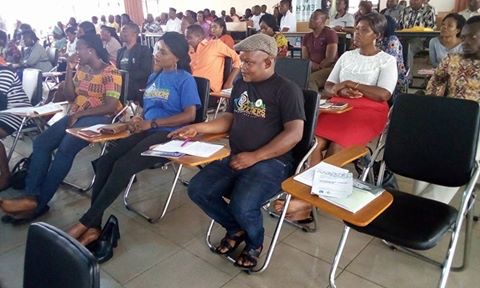


 Thinking about re-connecting to Mother Earth brings up one of my fondest memories of my late father. Those were moments moments when we stood at the back of our home and gazed at the verdant valley rolling off our garden and on to the sculpted hills that fade off as far as our eyes could see. Those were the moments he told me stories of life. The stories close to his heart. And each time we stood there he told me the same stories. Although I grew weary of hearing the same tales over and over again, I always looked forward to those precious, private moments. Today, older and hopefully wiser, I understand the power of looking across valleys and over hills.

