Eating Genetically Engineered Pesticides. All through the ages, in the development of agriculture, humans have selected and cultivated crops and animals that thrive in their environments and are good for their health. Some of the factors that determine what we love as food are highly sensory and include the texture, taste, colour and their smell. Taste, for example, can drive people to eat things they know are not good for their health. Besides, people may tilt to a food product due to the power of suggestion through advertisement on the mass media.
Food can be an instrument of control and power. Weather variations and extreme weather events can bring communities and nations to their knees. Violent conflicts and wars can also render people hungry and expose them to the need to receive or purchase food aid. Yes, some food aids are paid for and are not exactly humanitarian. One nation that stood her grounds and insisted on what sort of food aid was acceptable is Zambia. They rejected the genetically engineered grains that were extended to them as food aid in 2002. And although much political pressure was piled on the nation, they did not starve but transited to bountiful harvest the following year. In the case of Nigeria, after the devastation of agriculture of the Northeast, we have received tones of seeds without verifying if they were genetically modified or not. That is how much food aid can trump caution.
What do consumers look for when they go shopping for groceries? Research has shown that consumers that care to read the labels on the food products prefer to buy those that are pesticide free and are not genetically modified. Generally, buyers prefer fresh, clean and natural products.
Unfortunately, many of our foods in Nigeria are sold in measures using cups and basins. Foods such as beans, garri, corn, amala, and the likes are often neither packaged nor labelled. You simply have to trust your eyes to tell you whether what you are buying is wholesome or not. And, our people hardly read the labels on the packaged products on the market shelves. They may read the brand names and pay less attention to the contents. Agencies saddled with policing our borders against entry of unauthorised foods, such as the ones that are made of genetically engineered materials, appear overwhelmed by the influx of these products. Products are imported without much filtering with the assumption that whatever is presented as food is safe. It is as if it is assumed that because a thing was made in the United States of America, for instance, then it must be good for our consumption. We simply do not know what we are eating. However, we should care to know as our health depends on that knowledge and our choice.
Regulators and promoters of genetically engineered crops and foods in Nigeria accuse those that question the technology of being fear mongers or anti-science. This may be dismissed as a hollow accusation, but when they make such arguments frequently, the real fear is that they may believe themselves. Besides, they also believe that they are running the best biosafety system in Africa and that other countries such as Burkina Faso who junked genetically engineered cotton, cannot be compared to the supposed high skills and facilities Nigeria boasts of. This arrogant posturing is extremely dangerous.
When scientists produce genetically engineered beans (cow pea), do they consider the fact that the insecticidal beans could also kill non-target organisms and that even the target pests could develop resistance? When crops are genetically engineered to withstand herbicides, do they consider that they kill other plants and not merely weeds? And what about the soil microorganisms they kill thereby disrupting the webs of life in the ecosystems?
Working beneath the supervisory radar, the promoters of these technologies are set to erode our biodiversity and set the stage for ecological harm. Nigeria has quickly become the testing ground for novel and risky technologies, exposing citizens to next levels of danger. With regards to the recently approved genetically engineered beans, we note that this beans variety with the transgene Cry1Ab used in its transformation, has not been approved anywhere else in the world. The International Institute of Tropical Agriculture (IITA) may have concluded field trials for a cassava variety that has never been planted anywhere else in the world. That cassava was engineered to produce starch that would last longer than normal before degrading.
All these genetically engineered events are prepared overseas and brought for testing in Nigeria and yet we boast that we are so equipped and innovative in the sector.
If anyone tells you that the producers of genetically engineered crops (and foods) are cocksure of their products, ask them why they fight against nations having strict liability clauses in their Biosafety laws. Uganda just inserted such a clause in their genetic engineering regulatory law, ensuring that makers of GMOs will be held liable for any harm that may come from cultivation or consumption of their products at any time, even if such effects come years down the road. Since that law was enacted, scientists have branded President Museveni and the Ugandan parliament as being anti-science. In other words, good genetic engineering science must leave room for doubt and when harms manifests, the producers should not be held strictly liable. That posture puts the Precautionary Principle on its head. That principle is the bedrock of Biosafety regulation. It simply means that where there is doubt, we should be cautious. The speed with which Nigeria is permitting GMOs is highly suspicious and offers no assurance that the government is concerned about food safety and the preservation of our biodiversity.
Nigerians must be mindful of what we buy, cultivate or eat. We can bet that no one will knowingly eat an insecticide. But that is what we do if we eat any crop genetically engineered to be insecticidal.
ADoseofNeedlessMedicine. In this reflection we are looking at genetically modified cotton (GM) in the light of the Tortoise Principle. There is a folktale about a time a Lion was sick and declared that all the animals in the kingdom should pay him a get-well-soon visit. After several animals had heeded the call it was Mr Tortoise’s turn. On arrival at the gate of Mr Lion’s home, Mr Tortoise noticed that all footprints were in one direction, all going into the house with none coming out or going in the other direction. On careful reflection on the import of this observation, Mr Tortoise turned back and decided not to go into Mr Lion’s house. Did Mr Tortoise decide to avoid Mr Lion’s house out of fear?
Our submission is that the decision not to enter a house from which no visitor emerged was not predicated on fear but on sound judgement.
Our application of this tale relates to the forced release and endorsement of genetically engineered crops and products into Nigeria without due consideration of clear failures elsewhere and with a cavalier attitude to the grave danger that these artificial crops and products portend to the health of our peoples and environment. At a recent press conference by the ministers in charge of Agriculture and Science in partnership with Bayer-Monsanto
to celebrate Monsanto’s release of genetically engineered cotton into the Nigerian market and environment, the Nigerian Minister of Agriculture declared that although he was not a scientist, he saw no reason for not accepting genetically engineered crops. He went on to say that Africans are too fearful of “new things.” In other words, the minister was declaring that those who call for precaution over the release of these artificial crops into our environment are unreasonable and do so out of fear. On his part, the minister of Science repeated myths peddled by the biotech industry and their cohorts – that genetically engineered crops yield more than natural varieties and require less pesticides (because some of them are pesticides) and make farmers rich.
The positions of the ministers raise serious questions about their willingness to dispassionately consider issues related to these technologies. The position that GMOs are rejected out of fear does violence to the integrity of scientists and governments who fought hard to ensure that the Precautionary Principle is a cardinal element of the United Nation’s Convention on Biodiversity (CBD). Indeed, because of the knowledge of the harms related to the release of genetically engineered organisms into the environment and in food, the African Union (then known as the Organisation of African Unity) produced the African Model Law on biosafety. That model law was to provide African governments a basic scaffold on which to build sound Biosafety regulatory frameworks. The notion that it was not the job of regulators to stop GMOs, as often peddled these days, was alien to the defenders of biodiversity.
At that time, African governments knew the importance of biodiversity in securing nutritious food and building resilience of local agriculture to the vagaries of weather and pest infestations. African research institutes had scientists that were engaged in promoting crop and animal species that were suitable to the local environment and yielded products that suited the local cultures, tastes and had acceptable levels of storability. That was the focus of science and agricultural ministries at that time. The coming of Structural Adjustment Programmes of the international financial institutions in the 1980s ensured wholesale adoption of neoliberal conditionalities and policies that brought about the destruction of local agricultural support systems. They also destroyed social safety nets and made our countries dumping grounds for all sorts of products which today appear in the form of untested GMOs originating from corporate laboratories that are not in the least concerned with our interest.
Today the framework that would have protected our environment is being shredded, and Nigeria is leading the pack in this ignominious degradation. This reverse leadership is very visible at the ongoing CBD Conference of Parties (COP24) with Nigeria and South Africa as the main negotiators. The most contentious items at the negotiation include what to do with extreme genetic engineering including synthetic biology (Synbio) and gene drives organisms (GDOs). These are technologies that have dire socio-economic and ecological consequences for Africa. Reports from the COP show serious opposition to gene drives with a number of countries demanding spoke a moratorium on the technology. Opposing countries include Bolivia, El Salvador, Grenada and Egypt. Shockingly, most African countries at the COP have become advocates for gene drives probably with the hope of attracting grants and other pecuniary benefits to their governments.
Observers believe that the inexplicable enthusiasm of a group of African nations, including Nigeria, to reject a moratorium on gene drives and to promote their release may be connected to the Gates Foundation’s funding for the production and release of gene drive mosquitoes in Burkina Faso by an organisation called Target Malaria.
Gene drives is a new gene-editing technology that makes it possible to have species-wide genetic engineering through the aggressive spreading of genetic changes through the wild. Analysts posit that gene drives have a high potential for unpredictable, and even uncontrollable, impacts on biodiversity, wildlife and ecosystems.
The products that the synthetic biology industry is bringing into market include a vanilla flavour produced using synthetically modified yeast and some special oils used in soaps and detergents derived from synthetically modified algae. The replacement of natural vanilla with a synthetic variety has implications for millions of farmers, many of them Africans, who depend on them for livelihoods. They also have social and cultural implications. In addition, scientists warn that genetically modified algae and yeast could have unpredictable health effects and ecological impacts if they escape into the environment.
To say that opponents of GMOs are fear mongers is a sad way of demonizing Africans as fearful of new technologies. If fear is a factor in the demand for strict risk assessment of new technologies, that fear must be one that rises from the fact that public officials who should protect our interests are instead being tied to the apron strings of corporate and pseudo philanthropic interests. The Tortoise principle requires that we setup platforms for the critical assessment of new technologies.
As the world edges towards unleashing unregulated technologies that have the capacity to wipe out species, and can readily be made into biological weapons, we have a duty to review how we regulate our foods and environment. A situation where the most vulnerable continent, with scant capacity to regulate and contain basic genetic engineering, cheers on the merchants of the technology spells nothing but trouble.
As representatives of a broad range of African civil society organisations (CSOs), we do not feel represented by the delegations of Nigeria and South Africa, speaking on behalf of African Group, in their attempt to speak on behalf of the people of Africa on the issue of synthetic biology (synbio) and gene drive organisms (GDOs).
Throughout the history of the United Nations (UN) Convention on Biological Diversity (CBD) and the UN Cartagena Protocol on Biosafety, African delegates have championed the defence of our biodiversity, protection of our seeds, indigenous agroecological practices and culture. They have always advocated the need for a precautionary approach.
In the past, African delegates have strongly defended our ecological life-support systems from threats, such as Terminator technologies (seeds designed to be sterile).
We are now alarmed at what is going on at COP14 and how our concerns for our environment, biodiversity and communities are being betrayed and threatened by delegates from some African nations. In particular, they are not representing our concerns about gene drives and synbio.
Most countries in Africa are still grappling with the threats from basic genetic engineering and associated agro-toxics and do not even have experience or capacity for basic regulation of the risks for those first-generation genetic technologies, let alone synbio and GDOs.
Gene drives, such as those being promoted by Target Malaria, aimed at releasing gene drive mosquitoes in Burkina Faso, are a deliberately invasive technology designed to propagate genetic material across an entire population – potentially wiping out entire species. As Africans, we are forced to confront this new and serious threat to our health, land, biodiversity, rights, and food supply.
African government delegations appear to have been neutralised. They have fallen from grace on the altar of the multi-national corporations, gene giants and private foundations. The African group’s position at the CBD slavishly replicates the position of these interest groups.
As Africans, we do not wish to be lab-rats for Target Malaria’s experiments. We refuse to be guinea pigs for their misguided disruption of our food systems and ecology.
We call on the African and all other delegates to put the brakes on this exterminating technology. We reject any form of representation that is against the interest of our peoples and biodiversity. We call on the governments of Africa to call their delegates to order and avoid acquiescence to unfolding intergenerational crimes.
Signed by the following organisations:
-Alliance for Food Sovereignty in Africa.
– La Via Campesina Africa
– Friends of the Earth Africa
– Coalition for the Protection of African Genetic Heritage (COPAGEN)
– CCAE Collectif Citoyen pour L’Agroecologie
– Fahamu Africa
– Advocates Coalition for Development and Environment, Uganda
– Eastern and Southern Africa Small Scale Farmers Forum (ESAFF)
– Comparing and Supporting Endogenous Development (COMPAS Africa)
– West African Association for the Development of Artisanal Fisheries (ADEPA)
– Plate-forme Régionale des Organisations Paysannesd’ Afrique Centrale (PROPAC)
– Convergences Régionales Terre-eau et Autres Ressources Aturelles
– Network of West African Farmer Organizations and Agricultural Producers (ROPPA).
– Terre á Terre, Burkina Faso
– Fellowship of Christian Councils and Churches in West Africa (FECCIWA)
– African Centre for Biodiversity
– Inades-Formation
– Indigenous Peoples of Africa Co-ordinating Committee (IPACC)
– Jeunes Volontaires pour l’Environnement (JVE International)
– Institute de Researche et de Promotion des Alternatives en Development Afrique (IRPAD)
– The Africa CSOs’ Coalition on African Development Bank
– Health of Mother Earth Foundation
– Committee on Vital Environmental Resources, Nigeria
– The Young Environmental Network, Nigeria
– Community Empowerment Initiative (GECOME) Nigeria.
– Gender and Environmental Risk Reduction Initiative(GERI), Nigeria.
– Climate Change and Amelioration Initiative( ECCAI), Nigeria
– Pearls Care Initiative (PCI), Nigeria
– Intergrity Conscience Initiative (ICI).Nigeria
– Participatory Ecological Land Use Management (PELUM) Association
– Rural Women’s Assembly
-Rural Alliance for Green Environment (RAGE), Nigeria
– Bio Interrity in Natural Foods Awareness Initiative, Nigeria
– Initiative for Peace, Empowerment and Tolerance, Nigeria
Way back yesterday
In the glow of nighttime fires
We sat around steamy bowls
Carving up mounds of foo foo
Then dipping our hands in hot soups
Mouths long open awaited the feast
With every bite our tongues knew the source
Jolly jolly bellies, happy happy hearts
We danced our way through the night
These days we line up at the shops
Awaiting junk foods and maybe small chops
Bright coloured walls and blinding lights
We take selfies as we down deadly sodas
With loud music, we munch and munch but hear no crunch from our plastic foods
We can plant a seed
And not eat poison
These days we go to the farm
It could also be the harvest is next to our homes
Straight bananas
Squared up squash
Cassava tubers that don’t ferment
Genetic engineers target our staple crops
Especially ones grown by women
With mythic tales they sell lies
Crops kill pests and innocent species
Like their ancestors sold beads, mirrors and whiskies
And we are to be excited eating pesticides
And wash down with water packed in plastics and served like drugs
We can plant a seed
And not eat poison
We live in the city
Streets blocked with cars
Every piece of land thoroughly cementified
The Earth is denied rain from the sky
You want some water, toxic drains send a deluge
We want some corn?
Go to the shop
You want vegetables?
Go to the shop
“This food is safe”
That’s what they say
Made by giant conglomerates
On the back of imperial neocolonial agencies
But they cannot even say what they sell
All they yell
Is “shut up and eat
“An hungry man has no choice”
Genetically engineered
Isolated from weeds with glyphosate
We can plant a seed
And not eat poison
All around us seeds are sprouting
Along the rivers and streams through our cities
Every city block long abandoned
Day and night we sow the seeds
Many don’t ask where magical fresh foods emerge
We labour all day to bring yet nothing to eat
Officials feed fat on our labours
Then loosen their belts
Call the bulldozers
Pull down our dreams
Level our fields
Destroy our homes
“This urban space isn’t for rats
Go back to the village unwanted migrants
Our foods are imported, packaged, some even come as aid”
We can plant a seed
And not eat poison
The food we eat must not eat us
Mother Earth warns: we are all her children
The plants, the birds, the beasts, the worms, the bees, the butterflies
In the soil and above the soil
On the seas and beneath the seas
Trillions of our relatives call to us
“Globalize the struggle
Globalize hope!”
Globalize the people
Not transnational corporations
Resilience
Solidarity
Hope
Power
Life
are all in the seed
And if we care we can touch the soil
We can plant a seed
We can water a plant
We can nurture life
We can raise a goat
We can connect to the soil
And allow Mother Earth to feed us all
We are glad to serve you a feisty edition of your informative Eco-Instigator. In it you will find articles and reports from our projects and our continuous struggles for ecological justice.
Due to the focus of extractive industry on offshore exploration and exploitation actions, the need for fishers to step up to the challenge has never been more urgent. Fishers stand at the frontline of the struggle against deep sea mining as well as offshore pursuit of oil and gas resources.
We serve you reports from our Fish Not Oil community dialogues where fishers review the state of our water bodies, note the changes, map the culprits and chart the course of action to protect our marine ecosystems. These spaces are also used to create linkages between fishing associations and for the expansion of an emerging FishNet Alliance.
We also bring you the reports from our School of Ecology focusing on Life After Oil. We held the maiden session of this exciting school in our Oronto Douglas Board Room, Benin City 30- 31 July 2018. The second session was hosted by We The People in Port Harcourt, Nigeria, on 29 August 2018. Participants had two additional days during which they joined in the Right Livelihood Lecture as well as Sustainability Academy, both held at the University of Port Harcourt. Reports of these will be brought to you in our December edition. While the maiden edition was exclusively for youths, the second session extended the age bracket and admitted community persons with a bias to women. Life After Oil campaign is an offshoot of our Beyond Oil research that drove for a reimagining of development in the Niger Delta and Nigeria as a whole.
Our fight for food sovereignty continues in an atmosphere of absolute disregard for the dangers posed by the introduction of genetically modified crops into our environment. Nigerian Biosafety Management Agency (NBMA), gleefully announced the release of Bt cotton into the market while our case on their permit to Monsanto was awaiting decision in court. We considered this a disregard of due process and a crass display of the arrogance of the industry and their allies. The court eventually decided against us, but on the technical grounds that the case was statute barred and that we filed the suit outside the stipulated time boundary. The struggle continues.
As usual, we bring you poems, book review and books that you should read as well as indications of our forthcoming events. We will be glad to hear from you.
Systemic betrayal of farmers. Applications for the introduction of genetically modified organisms (GMOs) into Nigeria started flowing literally before the ink with which the bill was signed into law had dried. Promoters of modern agricultural technology, notably the agency set up for that purpose before the law was dreamt up were ecstatic. In less than a year, the controversial biotech and chemical company, Monsanto, had collected the first three GMO permits to ever be issued in the country.
This was very significant, not because of the recipient but because they were applying to introduce a crop that had just failed spectacularly in Burkina Faso. That was the Bt cotton that had nearly ruined cotton growers in that country. The Nigerian regulatory agency, National Biosafety Management Agency (NBMA) apparently believes that Monsanto was too big to fail and that they would do better in Nigeria. The bad news for them is that just as they were not too big to be swallowed up by Bayer, the German chemical company, they are not strangers to failure.
Trust Built, Trust Betrayed
Farmers trust government to support their efforts to feed the nation. This implicit trust was built in the days before the so-called structural adjustment programme imposed on the nation by international financial institutions decimated the ranks of extension officers and other support mechanisms. The trust was also built by public research institutes providing sound agricultural advice, seeds and roots to farmers. Government and farmers were partners in progress. Today the faith of farmers that government would always extend the best support to them is being betrayed in obnoxious ways.
The betrayal happens because farmers are being sold the idea that genetically modified crops provide the best options to ensure high yield, enrich the farmers and abolish hunger from the land. Farmers are equally not warned of the harmful impacts of agrotoxics that they must apply as they grow the genetically modified crops. Superficial roadshows advertising GMOs are falsely construed to be consultations with the public. Glossy brochures, television and radio programmes with tilted and dubious information have become the order of the day. And they equally use local and foreign movies to add to their arsenal of falsehood.
Feeding Hungry Africans on Lies
The rapid evolution of the subversion of our food system is accelerated by the opening of the gates for an influx of genetically modified grains – like maize- thus constricting the market space for local farmers. We believe that it is time that our people begin to look the proverbial gift horse in the mouth, no matter who is presenting the gift.
The argument that Africa needs GMOs in order to feed her population is nothing but a commercial narrative that on scrutiny holds no water. For more than two decades that GMOs have been around they have not halted the upward rise of hunger in the world. Indeed, the yield from GMOs do not surpass those of natural crops. Instead of reducing the use of herbicides and pesticides, GMOs have created super weeds and super bugs requiring stronger doses of the toxic chemicals.
Dearth of Expertise
The absence of adequate biotechnology expertise in the development and regulatory sphere makes it inescapable that the biosafety discourse is shaped to suit the preferences of the actual developers who stand to gain from the technologies. The genetically modified maize (NK603 and MON 89034 x NK603)) varieties for which Monsanto got permits were not developed in Nigeria. The Bt cotton that has been approved for placement in the market was not developed in Nigeria. The GMO cassava being field tested at the International Institute of Tropical Agriculture (IITA) in Ibadan was developed in Switzerland. All the GM maize and soybean being approved for various purposes in the country were developed elsewhere. In addition to being developed elsewhere, the required risk assessment before they are brought into Nigeria is perfunctory exercise.
Mute Food Safety Controllers
The National Agency for Food and Drug Administration and Control (NAFDAC) that should safeguard the foods on our market shelf is busy playing the ostrich while the land is flooded with the products. Indeed, NAFDAC is expected to give a bill of health to any GMO product or seed before importers can apply to bring the GMOs into the country. At present it is doubtful if NAFDAC is providing such a cover for Nigerians. We say doubtful because the agency us yet to respond to an enquiry HOMEF sent to them on 1 February 2018 seeking to know if they granted a clean bill of health to enable NBMA issue permits to WACOT Nigeria Ltd to import genetically modified maize for feed and processing. The murky process through which the permit was issued to the company raises red flags over the entire regulatory architecture demanding closer scrutiny. WACOT’s application was based solely on the fact that certain genetically modified maize varieties had been approved for use in the European Union (EU). However, it is our position that the approval of anything in the EU does not confer automatic endorsement for entry into Nigeria. Biosafety requires case by case risk assessment in each jurisdiction that any of the artificial organisms are taken.
Counting on The Law
As legal experts, the Nigerian people need your help in fashioning out means of ensuring that we are not ambushed into eating anything without knowledge of their makeup and safety. Our people require your help in ensuring that our food system is protected and that our biodiversity is protected. Our people will be happy to receive an understanding of the provisions of the law governing biosafety in Nigeria as well as if what exists is sufficient to protect them. We also hope that you will keep an eye on unfolding events in other jurisdictions where for example, Monsanto has been asked by a court to pay $289m to a citizen of the USA for cancer attributed to the use of that company’s weed killer, Roundup.
In all, Nigerians want to know the legality or otherwise of the roughshod march of the GMO train in our land.
——-
Welcome words by Nnimmo Bassey at Round Table with Lawyers on Promoting Biosafety in Nigeria – held on 26 September 2018 in Abuja, Nigeria
Is There Biosafety in Nigeria? At a recent HOMEF dialogue with farmers, most of the participants declared that they have never heard of anything called genetically modified organisms (GMOs). When they got to know what GMOs are, they all declared that genetically modified crops are bad for our agriculture and overall environment.
Despite huge financial outlays in modern agricultural biotechnology roadshows, the people remain unaware of these commercially and politically driven organisms that are rapidly being released into our markets and environment. Without free and clear knowledge of these artificial organisms, it can be said plainly that the right of our people to safe food and safe environment is being officially breached with crass impunity.
As we speak, the promises of the first-generation GMOs that are being promoted in Nigeria are unraveling – with persistent failures being recorded around the world. Herbicide use has increased rather than reduce – of course the toxic chemicals are made by the makers of the GMO seeds. Pesticide use has not waned even though Bt crops (crops inserted with gene from the organism, Bacterium thuringiensis) are essentially engineered to act as pesticides themselves. Farmers are trapped in debt in the cotton fields of India because of the seeds-chemicals trap traceable to GMO Shylocks. GMO infested South American countries are reeling from chemical poisons on farmworkers and in farm-fence communities. In the United States of America, Monsanto was ordered to pay $289m in damages to Dewayne Johnson after a jury found that the company’s Roundup weed-killer caused him cancer. There are over 4000 similar cases in the USA. The safety of GMOs and the claim that GMOs yield higher than normal crops have not been proven.
The old GMOs are now being joined by more extreme variants known as Gene Drives. That target whole populations, involve gene editing and do not involve cross-species gene transfers. They pose special and unique dangers to Nigeria and Africa. The first danger is that our regulators are gullible and tend to be remotely controlled by forces that promote untested technologies. The second danger is that even the dangers and risks are known, they are happy to allow experimentation and expose our people, communities and environment to be used as guinea pigs.
A great risk is that the influencers of the technologies in Nigeria are already trumpeting that Nigeria must jump on the gene drive train just because we must, as a people, play the neocolonial catch-up game with targets set offshore.
Two cases to buttress this assertion relate to biotechnology experimentation in Burkina Faso. Firstly, was the failure of Monsanto’s Bt cotton in that country that led to the phase out of the GMO from Burkina Faso. The same GMO cotton that failed is now to be released in Nigeria, the second testing ground for an unnecessary and failed product. Of course, the local experts serving as midwives or middle men of the technology in Nigeria are celebrating that they can release the varieties into our environment without check, without questions.
Secondly, modern biotechnology entrepreneurs like Bill & Melinda Gates Foundation are funding Target Malaria to release 10,000 gene drive mosquitoes, in a village in Burkina Faso without our relatives there being truly aware of the what would be biting them. The gene drive mosquitoes are designed to crash the population of female anopheles mosquito species that transmit malaria parasite. Risks of this untested technology include the fact that they could have unexpected ecological problems, could be used as a weapon of war and is deployed without real prior informed consent of the poor villagers. This is another technofix to tackle a problem that has roots in poor sanitation and socio-economic inequities, among others.
A great risk is that the influencers of the technologies in Nigeria are already trumpeting that Nigeria must jump on the gene drive train just because we must, as a people, play the neocolonial catch-up game with targets set offshore.
We need to interrogate not just the technology but also the regulation of the technologies. We need to ask why an application from a company like WACOT Ltd was approved when the only backing document, as published on NBMA’s website was a sheet of paper showing varieties of genetically modified maize approved by some European countries. This application was approved although there has been no risks assessment in Nigeria and even though approval in the EU does not in any way confer automatic acceptance of those things in countries outside of the jurisdiction within which they were approved. The application did not state that about half of EU countries do not allow these varieties of maize into their countries. For Nigeria, anything goes because everything is safe for Nigerians no matter how toxic they may be to others.
A grave problem with this approval of genetically modified maize for production of feed by WACOT Ltd is that the company sought and obtained the approval after being adjudged to have imported the GM maize without due approval and had been asked to repatriate the maize to Argentina from where it was imported. A further issue that cannot be ignored is that the Federal Executive Council (FEC) had been notified of the impounding of the illegal and unauthorized transboundary movement of the genetically modified maize into Nigeria. According to reports, the FEC was also informed that the offending company had been asked to send back the illegal shipment. Yet, the same illegally imported grains were approved for release and use by the company. The repatriation order proved to be a mere smokescreen. The company was further licensed to import the supposedly EU approved GM maize over a period of three years.
As you all know, Health of Mother Earth Foundation along with 16 other civil society groups filed a suit challenging the granting of permits to Monsanto Agriculture Nigeria Ltd for the confined field trial of genetically modified maize (NK603 and MON 89034 x NK603)) as well as commercial release of Bt cotton earlier mentioned. We challenged the permit based on strong scientific, sociology-economic, environment and administrative concerns. We also drew attention of the court to the fact that the approvals were granted on Sunday 1 May 2016 a mere one working day after the National Biosafety Management Agency (NBMA) acknowledged that they had received our copious objections and promised to consider them. They obviously did not consider the views expressed in our objections. The judge eventually struck out the case based on the technicality of the case being statute barred. In other words, the case was struck out because we filed the suit more than three months after the permits were granted. The GMO promoters of all shades, both local and international, have crowed that the decision of the court equals an open door for any sort of GMOs to be brought into the country. That is an absolutely specious understanding of the court’s decision. The judge clearly stated that case was not struck out for lack of cause but because the particular action was statute barred. No time for celebration, Monsanto chiefs!
We will go into more details concerning the reasons Nigerians have to worry about the state of biosafety in the country. There is certainly time for that. Although we may no longer waste our time and resources sending objections to a regulator that disdains public opinion, we will not shirk our responsibility to demand safe and suitable foods for our peoples.
Welcome words at a Media Training on Promoting Biosafety in Nigeria – held on 25 September 2018 in Abuja, Nigeria
Small-scale or family farmers feed the world. This is an incontrovertible fact. This fact is unfortunately often overlooked. The willful rejection of the truth that small-scale farmers feed the world has persisted because accepting the truth would compel policy makers to refocus attention where it matters rather than pumping resources into industrial farming that create ecological and socioeconomic problems, and is vastly inefficient when outputs are compared to inputs. Small scale farmers use less than 30% of arable land and resources and feed 70% of the population while the reverse is the case with industrial farming.
Scare tactics of ever-growing population has been used as an excuse to force the diversion of public funds into private industrial agriculture as well as the introduction of genetically engineered crops into Africa and other parts of the world. Again, the fact that the world currently produces enough food to feed almost double the current population is ignored in the conversations. For Nigeria, our country, we are told that we will have the third largest population by 2050, surpassing the United States of America (USA) among others. In fact, the United Nations projects that the population growth rate in Africa will “at least double” by 2050. Lineal population growth may be possible if African countries deepen socioeconomic disparities and do not improve on social indices and if disease, poverty and illiteracy persist. It is time to re-examine the statistical basis of Nigeria’s population otherwise the shame will be on us when we become the most populous nation on earth and the people cannot be found!
Concerned medical doctors and religious bodies and consumer groups have expressed reservations over the pollution of our seeds and foods. The agencies responsible continue to push on in utter contempt of these concerns.
Another fact that begs for acceptance is that people are not hungry because there is no food in the world. About 30 percent of food goes to waste. In addition, industrial farming thrives on monocultures and is the major supplier of feed stock, as expected, for industrial processes. The assertion that people are not hungry due to lack of food in the market is also buttressed that most of the people that go to bed hungry are actually farmers. This happens because farmers have to sell their produce so as to meet family needs – such as housing, medicals, transportation and school needs of their children.
Farmer to farmer exchanges are vital for the sharing of ideas, farming practices and ways for preserving seeds and our overall biodiversity. Meeting to have dialogues between farmers provides a platform to diagnose the challenges facing small holder farmers as they struggle to meet the food requirements of the population.
Dialogue spaces also provide platforms for examining the quality of seeds available to farmers and the special threats posed by opening of the flood gates to genetically engineered crops into Nigeria.
We continue to demand for a radical revision of the National Biosafety Management Agency (NBMA) Act 2015 and the installation of a neutral Biosafety Regulatory Agency that is totally different from the extremely pro-GMO one currently in place. In fact, today it is hard to distinguish NBMA from National Biotechnology Development Agency (NABDA) – an agency expressly set up to promote GMOs even before any biosafety law was in place in the country. We are experts at putting the truck ahead of the truck pusher and once on the wrong path we stubbornly refuse to step back, except in rare cases like that of our Nigeria Air.
Today, respectable research institutions have bought into the GMO train making it difficult for farmers to know when they are being sold genetically modified cassava, beans or maize. Even if farmers were to know that they are being sold suspect seeds, once the seeds get into the food market, consumers have no way of knowing what is being sold to them. There is no way anyone will label akara, moi moi, ogi, eba or similar foods made from genetically modified seeds. In other words, Nigerians are on the wrong bus already.
Concerned medical doctors, religious bodies and consumer groups have expressed reservations over the pollution of our seeds and foods. The agencies responsible continue to push on in utter contempt of these concerns.
Together we will demand rural infrastructure, storage and processing facilities for farm produce as well as provision of extension officers to share knowledge on agroecological methods of agriculture that is in line with sustainable practices developed over the millennia and are not tied to the apron strings of institutions that are patently neocolonial and unpatriotic.
We will proceed to dissect, debate and consider the risks to our health and biodiversity, not just for our sake but for the sake of generations yet unborn. We are concerned that unproven assertions are presented as truths by GMO promoting agencies in total disregard of the globally increasing call for ban of cancer-causing herbicides that are already in our markets and will be more extensively used in the cultivation of crops genetically modified to withstand them.
Today we assure our farmers that you have strong allies in the GMO-Free Nigeria alliance and that we will stand with you in the struggle to ensure that technofixes are not presented as cure-all in our agricultural sector. We will stand with you and demand justice for us all. Together we will demand rural infrastructure, storage and processing facilities for farm produce as well as provision of extension officers to share knowledge on agroecological methods of agriculture that is in line with sustainable practices developed over the millennia and are not tied to the apron strings of institutions that are patently neocolonial and unpatriotic.
Farmers do matter and must be listened to.
——————————-
Welcome words by Nnimmo Bassey, director of the ecological think tank, Health of Mother Earth Foundation (HOMEF) at Farmers’ Dialogue – Promoting Biosafety in Nigeria – held on 21 September 2018 at Ugbiyoko, Benin City, Nigeria
The Federal High Court of Justice, sitting in Abuja on the 15th August, struck out the Plaintiffs suit the GMO case with suit No: FHC/ABJ/C5/846/2017 due to technicalities. The Judge in delivering his judgment said that it was his opinion that although the plaintiffs have a Cause of Action in this matter, the court’s hands were tied due to one of the objections raised by the defendants – that the suit was statute barred. The suit was brought a year after the permits had been issued. According to the Judge it is a contravention of the provisions of the Public Officers Act, which states that any action instituted against a public officer as regards his/her discharge of duties must be instituted within three months, after the said breach occurred. The case was struck out not for lack of merit or lack cause of action (the court did establish a Cause of Action) but because of technicalities.
Reacting to this, Health of Mother Earth Foundation (HOMEF), in a statement made available to newsmen expressed great displeasure as they consider this a fall back on efforts to preserve the nation’s food system from being overturned by the agricultural biotech industry.
The case was struck out not for lack of merit or lack cause of action (the court did establish a Cause of Action) but because of technicalities.
The registered Trustees of Health of Mother Earth Foundation (HOMEF) and sixteen other Civil Society Organisations in September 2017 filed the lawsuit against the Nigerian Biosafety Management Agency (NBMA), the Hon. Minister of Environment, Monsanto Agricultural Nigeria Limited, National Biotechnology Development Agency (NABDA), Hon. Minister of Agriculture, the Attorney General of the Federation and National Agency for Food and Drugs Administration and Control (NAFDAC) over permits granted.
In the summons which was taken out by Ifeanyi Nwankwere of Basilea Juris Associates, the plaintiffs insisted that 1st defendant did not comply with the provisions of the National Biosafety Management Agency Act in granting the permits to the 3rd and 4th defendants. The CSOs asserted that the procedure and issuance of the permits flouts and threatens the fundamental human rights of the people as enshrined in section 33, 34, 36 and 39 of the 1999 constitution of Nigeria as amended in 2011.
Other issues which the plaintiffs brought forward were that NABDA, which by the way are part of the governing Board of NBMA, in their application did not state adequate measures put in place to prevent cross pollination with natural varieties during field trials and that NBMA granted the permits without any public hearing regardless of the consequential issues raised in objections sent in by the Plaintiffs.
HOMEF maintains that agricultural biotechnology along with its current advances come with specific risks both immediate and long-term and require thorough safety assessments.
Recently, the Jury in San Francisco, USA after deliberating for days found that Monsanto’s glyphosate based weed killer caused cancer for a man named DeWayne Johnson, who used the weed killer for his job as groundskeeper in a school. Monsanto was ordered by the Jury to pay a fine of $289 million to the man for failure to warn him and other citizens about risks posed by its weed-killing products.
These same products accompany the cultivation of the seeds our regulatory agency is bent on flooding the Nigerian environment with. GMOs are accompanied with heavy doses of herbicides, most of which have with glyphosate, which in addition to the health risks degrade soils.
According to Nnimmo Bassey, environmental activist and Director at HOMEF, “Nigeria’s present regulatory architecture cannot ensure food and environmental safety as shown by the manner in which the National Biosafety Management Agency handles GMO applications. One troubling example is the case of genetically modified maize varieties which were illegally shipped into country by WACOT Nig. Ltd. in September 2017. The agency after announcing that together with the Nigerian customs service they would ensure that the illegal seeds were repatriated approved an application by this company to import these products over a period of 3 years, barely a month after its announcement that illegal maize should be repatriated. This action contradicts the biosafety law which requires 270 days’ notice before imports to allow for adequate safety assessments.”
Bassey emphasized that “the only essence of genetically modified crops is for the economic benefit of the biotechnology corporations and their counterparts and not the interest of Nigeria. With the release of these products into the environment, damage will be irreversible and the current economic strength of Nigeria cannot afford that damage.”
The activist added further in the statement that this ruling by the court encourages the administrative rascality and constant disregard for public interest and due process.
It is instructive to note that while the case awaited judgment, the defendants, NBMA, Monsanto and NABDA on 26th July went ahead to register and release the Bt cotton varieties (MRC 7377 BG11 and MRC 7361 BG11) along with other GM product into the Nigerian environment. These cotton varieties refer to the same cotton MON 15985 in the suit as evident on the website of the International Service for the Acquisition of Agri- Biotech Applications (ISAAA). This shows a stark disregard for judicial processes and a violation of law and order.
“The health and economic welfare of all Nigerians, which constitutes our fundamental rights, are at risk if GMOs are allowed in the country. Nigerians must be aware that we are neither respected nor protected,” he warned.
Also reacting to the court ruling, Mariann Bassey-Orovwuje, Lawyer and Chair of the Alliance for Food Sovereignty in Africa (AFSA) said in the statement that it would have been in the interest of justice to grant the reliefs set out on the face of the summons as this case represented not just consumers safety but the survival of millions of small scale farmers whose livelihoods are threatened by the corporate takeover of food systems in the guise of agricultural biotechnology. “We hope that when the impacts of GMOs sets in, the government of Nigeria will not say ‘we were not informed or warned about the impacts of GMOs.’ ”
It is regrettable that Federal High Court’s decision came at a time when the Chemical Company Monsanto has only been recently found guilty of knowingly causing grievous harm to one its consumers. This is not the first time Monsanto has been dragged to court. It is on record that Monsanto spends enormous amounts on legal defence to fend off the cases brought by the victims of its activities. Monsanto has a history of impunity, abuses and crimes. They manufacture highly toxic products that have contaminated the environment and permanently sickened or killed thousands of people around the world. They have destroyed life, plant and human health alike.
In April 2017, The Monsanto Tribunal of international judges presented in The Hague their legal opinion after 6 months of analysing the testimonies of more than 30 witnesses, lawyers and experts. Their conclusions are that Monsanto’s practices undermine basic human rights and the right to a healthy environment, the right to food, the right to health, it calls for better protective regulations for victims of multinational corporations and concludes that International law should clearly assert the protection of the environment and recognise ‘ecocide’ as a crime. Monsanto was found guilty!
Earlier in 2015, the cancer research arm of the World Health Organization had reported that glyphosate, a major component of weed killers used worldwide was a potential carcinogen (cancer causing agent).
The civil society coalition is of strong conviction that this is a cause worth fighting and would continue to seek redress. The organizations pledge not to relent in pushing the case for food safety and food sovereignty in Nigeria.They pledged to continue to resist attempts by Monsanto, its international and local partners to control our food, land, life and democracy.
Thinking about re-connecting to Mother Earth brings up one of my fondest memories of my late father. Those were moments moments when we stood at the back of our home and gazed at the verdant valley rolling off our garden and on to the sculpted hills that fade off as far as our eyes could see. Those were the moments he told me stories of life. The stories close to his heart. And each time we stood there he told me the same stories. Although I grew weary of hearing the same tales over and over again, I always looked forward to those precious, private moments. Today, older and hopefully wiser, I understand the power of looking across valleys and over hills.
Memories. Life. Hope.
There was a time when I got really agitated and angry if anyone responded with the phrase “no problem” when asked “everything okay?” The phrase, “no problem”, indicated to me that the respondent was not attentive to the objective realities around him/her. My emotions have been so moderated that I can stomach that response these days. I would only extend it: “no problem that cannot be overcome.”
Some of the problems confronting humankind today have been constructed by our greed, naivety and indifference. Humankind has arisen as a unique species when it comes to exploitation without responsibility and appropriation of the gifts of Nature without appreciation. Commodification of Nature has not ended in the transformation of the physical elements around us to the marketing of intangibles and things only grasped by imagination. Think of the fact that our major medium of exchange is the imaginary promissory material called money, for which individuals compete, kill and destroy. Is it not surprising that many people measure their worth by this weightless imaginary means of exchange?
The assault on Mother Earth has tested her patience. She was here before humans arrived. She will be here after we have left. How shameful that we could imagine that we own Mother Earth or a piece of her!
Market Environmentalism and Loss of Memory
The commodification of Nature has been built on the false notion that Nature can only be protected or defended if it has a monetary value. This extremely contentious idea has become mainstream in neoliberal thinking and drives policy discussions in official bilateral and multilateral spaces. Not surprisingly, serious harm has resulted from the market environmentalism and the loss of sense of the intrinsic value of Nature. These harms have not only arisen from the unrestrained exploitation of Nature without thought being given to the repercussions, it has permitted the crimes of ecocide and even genocide as tolerable inevitabilities.
It is this thinking that made a Chief Economist of the World Bank to write that Africa is under polluted and that it made economic sense to ramp up pollution on the continent. In his words,
“…I think the economic logic behind dumping a load of toxic waste in the lowest wage country is impeccable and we should face up to that. I’ve always thought that under-populated countries in Africa are vastly under-polluted.”
We see in this position that the market dogma can permit the twisting of logic and the willful poisoning of whole populations without compunction. In this statement, Africa is not only presented as nothing but a waste dump, she is also presented in a narrative that permits abuse. Here we refer to the notion of some African countries being under-populated. Although most African countries are actually under-populated, the popular narrative, and one that permits aggressive birth control proposals for the continent, is that Africa is overpopulated and is plagued by a threatening youth population bulge.
The logic of being under-polluted gives a good explanation of why international oil companies operating in the communities of the Niger Delta, Nigeria, can maintain an uninterrupted oil spilling and gas flaring for sixty years. As we speak, there are ongoing oil spills and unquenched gas furnaces raging in the communities. Raised as totems of development, the activities of oil companies have rendered the environment hostile to human survival. Oil activities have not only instituted militarization of the region and the attendant human rights abuses, the installation and transportation of extractive facilities have led to severe habitat loss and fragmentation occasioning the decline in biodiversity as well as threat to sustainable livelihoods of rural communities according to Prof. J. Ekpere in a foreword to HOMEF’s Report. Fragmentation of habitats in some communities come through the laying of oil and gas pipelines. In coastal communities, fresh water systems have been experiencing salinization due to canals constructed to allow movement of equipment inland. The result of turning fresh water brackish is a severe loss of biodiversity as well as loss of access to potable Water.
With water, soil and air assaulted with toxic elements, it is no surprise that human life expectancy has dropped precipitously to a mere 41 years in the region.
On the other hand, the idea that Africa is over populated is hinged on to encourage manipulation of plant genetic material in ways that are harmful to human health as well as the environment. Products of agricultural biotechnology are accompanied with heavy doses of toxic chemicals which degrade soils and run off to pollute water sources. This technology which is portrayed as the silver bullet to agricultural challenges puts livelihoods of millions of small scale farmers at risk while it favours a large-scale farming system that is driven by the profit motive and thrives on market monopoly.
Meanings and Actions
In a foreword to a report by Health of Mother Earth Foundation(HOMEF), Beyond Oil – Re-imagining Development in the Niger Delta, Alberto Acosta reminds us that, “serious environmental damage caused in the name of ‘modernity’, development and progress, the bastardization of concepts such as “sustainable development”, the persistence of false solutions such as the “green economy”, make it necessary to look no longer at alternative developments, but rather at “alternatives to development” and indeed alternatives to capitalist society. Such limitations should not lead to catastrophic conclusions. In various parts of the world, and in the Niger Delta itself, there are communities that re-imagine their lives over and over again.
“They have understood that they cannot follow the mantra of development and progress imposed by colonial and neocolonial invasions, whether military or conceptual. And from these readings many communities give concrete answers honed from their own daily life in response to their demands of life. Breaking with the false promises of oil, people’s alternatives emerge in this region of Africa, such as training, learning and re-learning programs; breeding poultry and chickens; integrated sustainable farms; community microcredit schemes; economic diversification programs; banana plantations without chemicals or transgenics; fish farms; own telecommunication and transport systems; communal farms to produce rice; use of renewable resources …”
Latching on the African philosophical concept of Ubuntu, Acosta points out that the needed alternatives are practical and hold the promise of “a decent life for many communities but, in addition, they are projected into the future, because they possess a strategic horizon of action. These alternatives are based on an ethical position: an assumption that a human being must not only take care of him or herself, but others as well. A person is understood to become a person by looking through the eyes of others; thus, human beings have to act with the consciousness of being interconnected with the rest of humanity and other living beings. Such a way of life involves caring directly for the environment and working for life in harmony with Mother Earth.”
It is dangerous to assume that simply because we speak to one another we have a common understanding of the terms and concepts that we use. It is rather the interrogation of terms such as modernity, development, progress, sustainable development and green economy that reveals whether we are on the same track or if indeed we are heading in divergent directions.
Things labeled modern are superficially seen as superior to things that are labeled primitive. Can this position be routinely correct? It cannot be assumed that simply because weapons of mass destruction are modern then they are superior to weapons of war that date back to thousands of years. Neither can we say that the fossil fuel dependent automobile is superior to a bicycle, outside the concept of speed. Even then, is moving faster an ideal if one is headed in the wrong direction?
Green is a Colour
Concepts such as carbon trading, green economy and even clean coal so readily capture attention. An oil company like Shell publishes an annual Sustainability Report. How sustainable is the extremely polluting extraction of oil and gas? Consider that other mining companies and governments project ideas of sustainable mining. How can extraction be sustainable. Extraction by definition is subtraction, a taking away, a hacking away at Mother Earth. In the same vein, sustainable development as a concept is an oxymoron. It is only when there is an agreed definition of development, including a base line that shows what is developed, underdeveloped or developing, that we can say if what is so defined is realistic in a finite world and if the conditions that led to that state of affairs can be replicated.
Green economy evokes an image of life, but in reality it places life on the chopping block. Built on the concept of commodifying Nature or keeping tabs of natural capital, it places value on so-called environmental services, including the job done by rivers and even the value of pollination by bees. It is doubtful that anyone can gauge the true value of the gifts of Nature in a way that would produce an equal ecological exchange.
By creative or selective accounting, efforts to internalize environmental costs in the price of commodities has not gained traction. This willful amnesia ensures that vulnerable workers, communities, territories and nations bear the hidden costs of extraction and production while the oligarchs smile to the bank with their bounties.
There is a global rejection of subsidies doled out to fossil fuel industries. We applaud the need the remove those subsidies, but that is not going far enough. When shall relief come to the communities/territories that are subsidizing the cost of extraction by bearing the brunt of environmental costs? When will Mother Earth enjoy a relief from these unending despoliations? When, indeed will the call to Keep it in the Ground become a binding rule and not just a slogan mouthed by the polluters and their supporting neoliberal institutions? When, indeed, will we demand an end to pollution and not merely demand that polluters pay?
The Measure of Progress
After the Lecture
What development or progress birth well being? Efforts have been made to measure development and progress through a variety of indexes including the notorious Gross Domestic Product (GDP) which has been described as Gross Domestic Problem (Lorenzo Fioramonti, 2013). It has been shown by many analysts that the GDP of a nation has no correlation to the state of well being of the citizens. Yet other indices include Measure of Economic Welfare (MEW), Total Income System of Accounts (TISA), Index of Sustainable Economic Welfare, Physical Quality of Life Index (PQLI), Human Suffering Index (HSI) and Ecological Footprint.
Writing on the quest for statistical measure of economic performance, Joseph Stiglitz said, “Just as a firm needs to measure the depreciation of its capital, so too, our national accounts need to reflect the depletion of natural resources and the degradation of our environment. Statistical frameworks are intended to summarize what is going on in our complex society in a few easily interpretable numbers. It should have been obvious that one couldn’t reduce everything to a single number, GDP. The report by the Commission on the Measurement of Economic Performance and Social Progress will, one hopes, lead to a better understanding of the uses, and abuses, of that statistic.”
Some politicians and statisticians are stuck with the GDP because it offers flattering pictures of their economies. As a compilation that is built mainly on imagination and sleight of hand, the GDP stubbornly marches on despite the arrival of other measures such as Human Development Index (HDI) and the Gross Happiness Index (GHI) that are closer to reality and do indicate a correlation to reality and the hopes of citizens.
Consider how Nigeria became Africa’s largest economy in 2014. Nigeria’s GDP was said to have grown by 6.81 percent in the third quarter of 2013. But this and other optimistic GDP projections mask the lived reality of ordinary citizens on the ground as evidenced even in official statistics. For example, a joint study conducted by the World Bank (WB) and the Nigerian Bureau of Statistics (NBS) on poverty in Nigeria. A blog on the report opens with an oblique statement that “The World Bank and the Nigerian Bureau of Statistics (NBS) have recently completed an in-depth analysis of Nigeria’s last set of household survey statistics, which were compiled in 2010 but until recently were not fully understood”. Why did it take the WB and the NBS so long to get to the point of comprehending the real situation? The stumbling block obviously is the stark contradiction between the huge growth rates in the nation and the “stubbornly high” poverty rates.
Reporting on the sudden jump of the Nigerian economy, the Economist (8th April 2014) tackled “How Nigeria’s economy grew by 89% overnight.” It explained that the base year for previous computations was 1999, but the government decided to change that base to 2010. The opening paragraph of the report makes a clear statement about GDPs. Here: “ON SATURDAY, April 5th, South Africa was Africa’s largest economy. The IMF put its GDP at $354 billion last year, well ahead of its closest rival for the crown, Nigeria. By Sunday afternoon that had changed. Nigeria’s statistician-general announced that his country’s GDP for 2013 had been revised from 42.4 trillion naira to 80.2 trillion naira ($509 billion). The estimated income of the average Nigerian went from less than $1,500 a year to $2,688 in a trice. How can an economy grow by almost 90% overnight?”
Waging War with GDP
The GDP as an economic measure goes back to the 1600s and has its roots in war efforts. It began when a physician of the British army, William Petty, was asked to conduct a systematic survey of the country’s wealth in order to aid in the redistribution of land among the soldiers. In order to position both land and labour for taxation, Petty tried to place market value on them. In the process, Petty got to increase his financial assets significantly. He acquired land from soldiers cheaply in lieu of salary and as such lands were declared “unprofitable.”
During the great depression of 1929 and 1941, it was found that market forces could not stabilize the economy quickly enough. The then president of USA needed a means of stimulating the economy and statistician Simon Kuznets started to work on the conceptualization and measurement of national income in 1932. His aim was to condense all economic production by individuals, companies and the government into a single number. The method developed by Kuznets finally came together during the Second World War (1939-1945) and the GNP was used a main scorecard for the design and implementation of national economic policy. The GNP accounts turned to be a powerful instrument used to estimate militarization costs and to calculate the speed at which the economy needed to grow in order to ‘pay for war’. Instructively, the government aimed to get citizens to increase consumption in order to be able to pay for the ammunitions used in war. It should be noted that Kuznets reportedly had reservations on the GDP right from the start. See Has GDP Outgrown its Use?
How could war or use of hard drugs be counted as activities that add to human welfare?
In the words of Lorenzo Fioramonti, “GDP was designed as a war device. That war did not end in 1945 but has continued ever since. It turned into an endless war against social equilibria, natural environments and non- renewable resources, in which consumers become the new foot soldiers; ultimately, a war against our own future on this planet”.
Humility and Defiance: Looking across that Valley
Memorable: Visiting Sulak Sivaraksa (RLA1995) with Hans van Willenswaard
Saying No to mining and Yes to life is not a decision taken lightly. It is an inescapable objective reality when one has seen and experienced widespread ecocide in communities and territories that happen to harbour the gifts of Nature. Humans have no doubt developed tools through the transformation of Nature. However, the shift into a throwaway system of production where obsolescence is inbuilt, so as to promote inordinate consumption, is indefensible. The sure way to living well is by respecting Mother Earth and ensuring that our actions do not impede her right to maintain her cycles.
Standing on the lips of the valley behind my father’s house, it becomes clear that living well is possible for individuals, communities and the larger society. Living well happens when we are at peace with ourselves and with other beings and see them as our relatives. Living well happens when solidarity trumps competition and reckless wars. Living well occurs when we do not compete about whose car or house is bigger. Not even about who has the larger or more destructive nuclear button.
As my mind’s eyes wander beyond the horizons, it becomes clearer that well-being is not a private affair. It may begin as a personal quest but is only actualized in our connectedness. It is consummated in the commons, in our collectives, in our cooperations and in our undying trust that we can recover our memory. A recovered memory reminds us that the Earth does not belong to us, but that we are children of the Earth. Calling ourselves sons and daughters of the soil states a deep truth. As Vandana Shiva stated, we are the soil!
We are stewards bequeathed with gifts that have generational responsibilities. It is time to see the gifts of Mother Earth as re-sources perpetually calling on us to re-connect to her. True reconnection provokes healing and at the same time eliminates divisive instincts, and the dispositions that promote exploitation, domination and destruction.
The complex ecosystems around and within us yearn for an understanding of the intricate connections in the webs of life. Living with this consciousness and practice is Ubuntu, true liberation, true healing of both self, society and Mother Earth. We are individuals, yet we are community. This reality calls for both humility and defiance. Humility to accept that the tiniest being, even those invisible to our naked eyes, and the most complex ones need each other. Defiance by the essential need to oppose irresponsible exploitation of the gifts of Nature, ecocide and war.
The power that will tilt the ecological balance in favour of the health of Mother Earth, respecting the rights of Nature, will come through broad based mass movements joining forces, building common understanding and forging global solidarity of peoples.
In conclusion
We are at a crossroads. The Chinese saying advises that to get out of a hole you have to stop digging. Now is the time to make the transition to a post extractivist world. Extractivism has had its day and has driven many species to extinction. It has yielded what may euphemistically be termed a plastic civilization. Now is the time to move to the back of our homes and take a long gaze at the remains of what we have not yet destroyed.
It is time to gaze at the valleys and hills and re-connect and re-encounter Nature as a critical priority that cannot be postponed. We simply have to terminate models that situates humans as external to Nature. We are children of Mother Earth and it is time to wake up, regain our memory and return home. For healing to begin and be sustained we have to put a halt to the harms.
 Eating Genetically Engineered Pesticides. All through the ages, in the development of agriculture, humans have selected and cultivated crops and animals that thrive in their environments and are good for their health. Some of the factors that determine what we love as food are highly sensory and include the texture, taste, colour and their smell. Taste, for example, can drive people to eat things they know are not good for their health. Besides, people may tilt to a food product due to the power of suggestion through advertisement on the mass media.
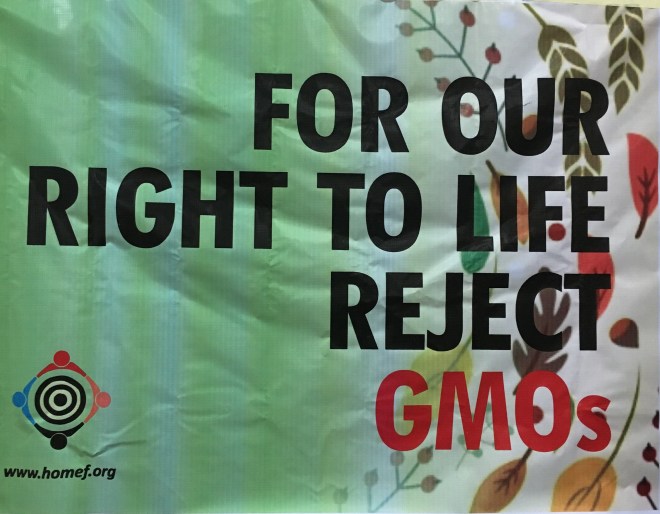 A Dose of Needless Medicine. In this reflection we are looking at genetically modified cotton (GM) in the light of the Tortoise Principle. There is a folktale about a time a Lion was sick and declared that all the animals in the kingdom should pay him a get-well-soon visit. After several animals had heeded the call it was Mr Tortoise’s turn. On arrival at the gate of Mr Lion’s home, Mr Tortoise noticed that all footprints were in one direction, all going into the house with none coming out or going in the other direction. On careful reflection on the import of this observation, Mr Tortoise turned back and decided not to go into Mr Lion’s house. Did Mr Tortoise decide to avoid Mr Lion’s house out of fear?
 Do Not Betray Africa on SynBio and Gene Drives
 We are glad to serve you a feisty edition of your informative Eco-Instigator. In it you will find articles and reports from our projects and our continuous struggles for ecological justice.
 Systemic betrayal of farmers. Applications for the introduction of genetically modified organisms (GMOs) into Nigeria started flowing literally before the ink with which the bill was signed into law had dried. Promoters of modern agricultural technology, notably the agency set up for that purpose before the law was dreamt up were ecstatic. In less than a year, the controversial biotech and chemical company, Monsanto, had collected the first three GMO permits to ever be issued in the country.
 Is There Biosafety in Nigeria? At a recent HOMEF dialogue with farmers, most of the participants declared that they have never heard of anything called genetically modified organisms (GMOs). When they got to know what GMOs are, they all declared that genetically modified crops are bad for our agriculture and overall environment.
 As you all know, Health of Mother Earth Foundation along with 16 other civil society groups filed a suit challenging the granting of permits to Monsanto Agriculture Nigeria Ltd for the confined field trial of genetically modified maize (NK603 and MON 89034 x NK603)) as well as commercial release of Bt cotton earlier mentioned. We challenged the permit based on strong scientific, sociology-economic, environment and administrative concerns. We also drew attention of the court to the fact that the approvals were granted on Sunday 1 May 2016 a mere one working day after the National Biosafety Management Agency (NBMA) acknowledged that they had received our copious objections and promised to consider them. They obviously did not consider the views expressed in our objections.
  Small-scale or family farmers feed the world. This is an incontrovertible fact. This fact is unfortunately often overlooked. The willful rejection of the truth that small-scale farmers feed the world has persisted because accepting the truth would compel policy makers to refocus attention where it matters rather than pumping resources into industrial farming that create ecological and socioeconomic problems, and is vastly inefficient when outputs are compared to inputs. Small scale farmers use less than 30% of arable land and resources and feed 70% of the population while the reverse is the case with industrial farming.

 The Federal High Court of Justice, sitting in Abuja on the 15th August, struck out the Plaintiffs suit the GMO case with suit No: FHC/ABJ/C5/846/2017 due to technicalities. The Judge in delivering his judgment said that it was his opinion that although the plaintiffs have a Cause of Action in this matter, the court’s hands were tied due to one of the objections raised by the defendants – that the suit was statute barred. The suit was brought a year after the permits had been issued. According to the Judge it is a contravention of the provisions of the Public Officers Act, which states that any action instituted against a public officer as regards his/her discharge of duties must be instituted within three months, after the said breach occurred. The case was struck out not for lack of merit or lack cause of action (the court did establish a Cause of Action) but because of technicalities.
  Thinking about re-connecting to Mother Earth brings up one of my fondest memories of my late father. Those were moments moments when we stood at the back of our home and gazed at the verdant valley rolling off our garden and on to the sculpted hills that fade off as far as our eyes could see. Those were the moments he told me stories of life. The stories close to his heart. And each time we stood there he told me the same stories. Although I grew weary of hearing the same tales over and over again, I always looked forward to those precious, private moments. Today, older and hopefully wiser, I understand the power of looking across valleys and over hills.

